

Journal of Creation 15(1):89–95, April 2001
Browse our latest digital issue Subscribe
The Darwinian foundation of communism
Summary
A review of the writings of the founders of communism shows that the theory of evolution, especially as taught by Darwin, was critically important in the development of modern communism. Many of the central architects of communism, including Stalin, Lenin, Marx and Engels, accepted the worldview portrayed in the book of Genesis until they were introduced to Darwin and other contemporary thinkers, which ultimately resulted in their abandoning that worldview. Furthermore, Darwinism was critically important in their conversion to communism and to a worldview that led them to a philosophy based on atheism. In addition, the communist core idea that violent revolution, in which the strong overthrow the weak, was a natural, inevitable part of the unfolding of history from Darwinistic concepts and conclusions.
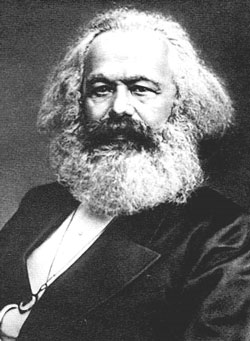
Darwinism as a worldview was a critical factor, not only in influencing the development of Nazism, but also in the rise of communism and the communist holocaust that, by one estimate, took the lives of more than 100 million persons.1 Marx, together with his forebears, associates and successors, was a doctrinaire evolutionist who tried to build his society on evolutionary premises. There is abundant documentation of this assessment and, few would even question it.2
Beate Wilder-Smith suggested that evolution is
“a central plank in Marxist doctrine today. The Nazis were convinced, as are communists today, that evolution had taken place, that all biology had evolved spontaneously upward, and that inbetween links (or less evolved types) should be actively eradicated. They believed that natural selection could and should be actively aided, and therefore instituted political measures to eradicate the handicapped, the Jews, and the blacks, whom they considered as ‘underdeveloped’ [emphasis in original].”3
Many extremists were active before Darwin published his seminal work, On the Origin of Species, in 1859, but since religious faith prevailed among both scientists and non-scientists before Darwin, it was very difficult for these radicals to persuade the masses to accept communistic (or other leftist) ideologies. Partly for this reason, Western nations blocked the development of most radical movements for centuries. Darwin, however, opened the door to Marxism by providing what Marx believed was a ‘scientific’ rationale to deny Creation and, by extension, to deny God.4 His denial of God, and his knowledge of Darwin, inspired Marx to develop his new godless worldview now known as communism. And like other Darwinists, Marx stressed that his communistic worldview was ‘scientific’ and, as such, employed a ‘scientific methodology and scientific outlook’.5 Bethell notes that Marx admired Darwin’s book,
“not for economic reasons but for the more fundamental one that Darwin’s universe was purely materialistic, and the explication of it no longer involved any reference to unobservable, nonmaterial causes outside or ‘beyond’ it. In that important respect, Darwin and Marx were truly comrades … ”6
And historian Hofstadter noted that most of the early orthodox Marxists “felt quite at home in Darwinian surroundings. On the shelves of the socialist bookstores in Germany the words of Darwin and Marx stood side by side”.7 He adds that communist books “that came pouring forth from the Kerr presses in Chicago [the major U.S. publisher of Communist books] were frequently adorned with knowing citations from Darwin, Huxley, Spencer and Haeckel”.7
Karl Marx
Born in 1818, Marx was baptized a Lutheran in 1824, attended a Lutheran elementary school, received praise for his ‘earnest’ essays on moral and religious topics, and was judged by his teachers ‘moderately proficient’ in theology (his first written work was on the ‘love of Christ’)8,9,10 until the time he encountered the materialistic and atheistic notions then prevalent at the University of Berlin. Marx wrote tirelessly until he died, producing hundreds of books, monographs and articles. Sir Isaiah Berlin even claimed that no thinker “in the nineteenth century has had so direct, deliberate and powerful an influence upon mankind as did Karl Marx”.11
Marx saw the living world in terms of a Darwinian ‘survival-of-the-fittest’ struggle, involving the triumph of the strong and the subjugation of the weak.12 Darwin taught that the ‘survival of the fittest’ existed among all forms of life. From this idea Marx believed that the major ‘struggle for existence’ among humans occurred primarily between the social classes. Barzun13 concluded that Marx believed his own work to be the exact parallel of Darwin’s, and that,
“like Darwin, Marx thought he had discovered the law of development. He saw history in stages, as the Darwinists saw geological strata and successive forms of life. … both Marx and Darwin made struggle the means of development. Again, the measure of value in Darwin is survival with reproduction—an absolute fact occurring in time and which wholly disregards the moral or esthetic quality of the product. In Marx the measure of value is expended labor—an absolute fact occurring in time, which also disregards the utility of the product. Both Darwin and Marx [also] tended to hedge and modify their mechanical absolution in the face of objections.”14
Marx owed a major debt to Darwin for his central ideas. In Marx’s words: “Darwin’s book is very important and serves me as a basis in natural selection for the class struggle in history. … not only is it [Darwin’s book] a death blow … to ‘Teleology’ in the natural sciences but their rational meaning is empirically explained”.15 Marx first read Darwin’s Origin of Species only a year after its publication, and was so enthusiastic that he reread it two years later.16 He attended a series of lectures by Thomas Huxley on Darwin’s ideas, and spoke of ‘nothing else for months but Darwin and the enormous significance of his scientific discoveries’.17 According to a close associate, Marx was also
“ … one of the first to grasp the significance of Darwin’s research. Even before 1859, the year of the publication of The Origin of the Species [sic]—and, by a remarkable coincidence, of Marx’s Contribution to the Critique of Political Economy—Marx realized Darwin’s epoch-making importance. For Darwin … was preparing a revolution similar to the one which Marx himself was working for … . Marx kept up with every new appearance and noted every step forward, especially in the fields of natural sciences … .”18
Berlin states that after he became a communist, Marx detested passionately any ‘belief in supernatural causes’.19 Stein noted that “Marx himself viewed Darwin’s work as confirmation by the natural sciences of his own views … ”.20 Hyman included Darwin and Marx among the four men he considered responsible for many of the most significant events of the 20th century.21 According to Heyer, Marx was ‘infatuated’ with Darwin, and Darwin’s ideas clearly had a major influence not only on him and Engels, but also on both Lenin and Stalin. Furthermore, these men’s writings frequently discussed Darwin’s ideas.22 Marx and Engels ‘enthusiastically embraced’ Darwinism, kept up with Darwin’s writings, and often corresponded with each other (and others) about their reactions to Darwin’s conclusions.23,24 The communists recognized the importance of Darwin to their movement and therefore vigorously defended him:
“The socialist movement recognized Darwinism as an important element in its general world outlook right from the start. When Darwin published his Origin of Species in 1859, Karl Marx wrote a letter to Frederick Engels in which he said, ‘ … this is the book which contains the basis in natural history for our view’. … And of all those eminent researchers of the nineteenth century who have left us such a rich heritage of knowledge, we are especially grateful to Charles Darwin for opening our way to an evolutionary, dialectical understanding of nature.”25
Prominent communist Friedrich Lessner concluded that Das Kapital and Darwin’s Origin of Species were the ‘two greatest scientific creations of the century’.26 The importance of Darwinism in the estimated 140 million deaths caused by communism was partly because:
“Clearly, for Marx man has no ‘nature’. … For man is his own maker and will consciously become his own maker in complete freedom from morality or from the laws of nature and of nature’s God. … Here we see why Marxism justifies the ruthless sacrifice of men living today, men who, at this stage of history, are only partly human.”27
Halstead adds that the theoretical foundation of communism
“ … is dialectical materialism which was expounded with great clarity by Frederick Engels in Anti-Dührüng and The Dialectics of Nature. He recognized the great value of the contributions made by geology in establishing that there was constant movement and change in nature and the significance of Darwin’s demonstration that this applied also to the organic world. … The crux of the entire theoretical framework, however, is in the nature of qualitative changes. This is also spelt out by Engels in The Dialectics of Nature, ‘a development in which the qualitative changes occur not gradually but rapidly and abruptly, taking the form of a leap from one state to another’. … Here then is the recipe for revolution.”28
Conner adds that communism teaches that by “defending Darwinism, working people strengthen their defenses against the attacks of … reactionary outfits, and prepare the way for the transformation of the social order”, i.e. a communist revolution.29
Friedrich Engels
Marx’s co-worker and frequent co-author, Friedrich Engels, was raised by a strict and ‘pietist’ Bible-believing father, but Engels, too, rejected Christianity, evidently partly as a result of his studies at the University of Berlin.30 At Marx’s graveside, Engels declared: “Just as Darwin discovered the law of evolution in organic nature, so Marx discovered the law of evolution in human history …”.31 Himmelfarb concluded, from her study of Darwin, that there was much truth in Engels’ eulogy to Marx:
“What they both celebrated was the internal rhythm and course of life, the one the life of nature, the other of society, that proceeded by fixed laws, undistracted by the will of God or men. There were no catastrophes in history as there were none in nature. There were no inexplicable acts, no violations of the natural order. God was as powerless as individual men to interfere with the internal, self-adjusting dialectic of change and development.”32
Alexander Herzen
Several others also were critically important in the development of the communist movement. One was Alexander Herzen (1812-1870), the first to articulate the new radicalism in Russia and, being a man who was in full harmony with Marx’s ideas, was a pioneer in calling for a mass revolt to achieve Communist power. His theory was a distinctively Russian version of socialism based on the peasant commune, which furnished the primary ideological basis for much of the revolutionary activity in Russia up to 1917. Herzen also was influenced by evolution:
“Herzen’s university writings are concerned primarily with the theme of biological becoming … . Herzen displays a good knowledge of the serious scientific literature of the period … especially works which announced the idea of evolution … [including] the writings of Erasmus Darwin, the grandfather of Charles and to a point his ideological predecessor… . He was abreast of the debate between the followers of Cuvier, who held to the immutability of species, and Geoffroy-Saint-Hilaire, the tranformationist or evolutionist; and of course he took the side of the latter, since the idea of continuous evolution was necessary to illustrate the progressive unfolding of the Absolute. In short, Herzen’s scientific training lay essentially in the raw materials for the biology of the Naturphilosophie.”33
Vladimir Lenin
Lenin also was influenced significantly by Darwinism, and operated in accordance with the philosophy ‘fewer but better’, a restatement of natural selection.34 He was raised by devout Bible-believing parents in a middle-class home.35 Then, in about 1892, he discovered Darwin and Marx’s works, and his life was changed forever.36 A catalyst to Lenin’s adopting Marxism was the fact that the unjust Russian educational system cancelled his father’s tenure with one year’s grace, thus throwing his family into turmoil. Within a year, his father died, leaving Lenin embittered at age 16.37 Lenin greatly admired his father, who was a hard-working, religious and intelligent man. Koster adds:
“The only piece of art work in Lenin’s office was a kitsch statue of an ape sitting on a heap of books—including Origin of Species—and contemplating a human skull. This … comment in clay on Darwin’s view of man, remained in Lenin’s view as he worked at his desk, approving plans or signing death warrants … . The ape and the skull were a symbol of his faith, the Darwinian faith that man is a brute, the world is a jungle, and individual lives are irrelevant. Lenin was probably not an instinctively vicious man, though he certainly ordered a great many vicious measures. Perhaps the ape and the skull were invoked to remind him that, in the world according to Darwin, man’s brutality to man is inevitable. In his struggle to bring about the ‘worker’s paradise’ though ‘scientific’ means, he ordered a great many deaths. The ape and the skull may have helped him stifle whatever kindly or humane impulses were left over from a wholesome childhood.”38
Joseph Stalin
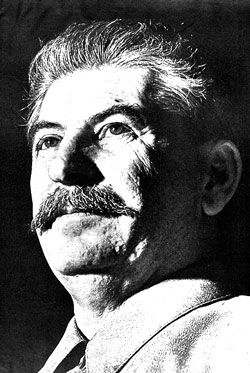
The Soviet dictator Joseph Stalin (born Joseph Djugashvili) murdered an estimated 60 million people.39 Like Darwin, he was once a theology student, and also like Darwin, evolution was important in transforming his life from a professing Christian to a communist atheist.40,41 Yaroslavsky noted that while Stalin was still an ecclesiastical student he “began to read Darwin and became an atheist”.42
Stalin became an ‘avid Darwinian, abandoned the faith in God, and began to tell his fellow seminarians that people were descended from apes and not from Adam’.40 Yaroslavsky notes that it ‘was not only with Darwin that the young Stalin became familiar in the Gori ecclesiastical school; it was while there that he got his first acquaintance with Marxist ideas’.43 Miller adds that Stalin had an extraordinary memory and learnt his lessons with so little effort that the monks who taught him concluded that he would
“ … become an outstanding priest of the Russian Orthodox Church. But in five years at the seminary he became interested in the nationalist movement in his native province, in Darwin’s theories and in Victor Hugo’s writings on the French Revolution. As a nationalist he was anti-Tsarist and joined a secret socialist society.”44
The result was that
“His brutal childhood and the worldview he acquired in that childhood, reinforced by reading Darwin, convinced him that mercy and forbearance were weak and stupid. He killed with a coldness that even Hitler might have envied—and in even greater numbers than Hitler did.”45
Koster added that Stalin had people murdered for two major reasons
“ … because they were personal threats to him, or because they were threats to progress—which in Marxist-Darwinian terms meant some sort of evolution to an earthly paradise of a type never yet shown to exist.”46
The importance of Darwin’s ideas is stressed by Parkadze, a childhood friend of Stalin’s:
“We youngsters had a passionate thirst for knowledge. Thus, in order to disabuse the minds of our seminary students of the myth that the world was created in six days, we had to acquaint ourselves with the geological origin and age of the earth, and be able to prove them in argument; we had to familiarize ourselves with Darwin’s teachings. We were aided in this by … Lyell’s Antiquity of Man and Darwin’s Descent of Man, the latter in a translation edited by Sechenov. Comrade Stalin read Sechenov’s scientific works with great interest. We gradually proceeded to a study of the development of class society, which led us to the writings of Marx, Engels and Lenin. In those days the reading of Marxist literature was punishable as revolutionary propaganda. The effect of this was particularly felt in the seminary, where even the name of Darwin was always mentioned with scurrilous abuse. … Comrade Stalin brought these books to our notice. The first thing we had to do, he would say, was to become atheists. Many of us began to acquire a materialist outlook and to ignore theological subjects. Our reading in the most diverse branches of science not only helped our young people to escape from the bigoted and narrow-minded spirit of the seminary, but also prepared their minds for the reception of Marxist ideas. Every book we read, whether on archaeology, geology, astronomy, or primitive civilization, helped to confirm us the truth of Marxism.”47
As a result of the influence of Lenin, Stalin and other Soviet leaders, Darwin became ‘an intellectual hero in the Soviet Union. There is a splendid Darwin museum in Moscow, and the Soviet authorities struck a special Darwin medal in honour of the centenary of The Origin’.48
Marx’s opposition to religion
Acceptance of Darwinism and rejection of religion were critical for the new movements of communism. When Marx abandoned his Christian faith and became an atheist, he concluded that religion was a tool of the rich to subjugate the poor. He openly denounced religion as ‘the opiate of the people’, and in nearly every nation where the communists assumed power, the churches were, if not abolished outright, neutralized in their effect.49 Opium is a pain-killing drug and Marx characterized religion as having the same function, i.e. it was used to pacify the oppressed because it stressed peace, non-violence, and loving one’s neighbor. The result was it made them feel better but did not solve their problems.
Marx felt that religion is not just an illusion: it had a deleterious social function, namely to distract the oppressed from the truth of their oppression and prevent people from seeing the harsh realities of their existence. So long as the workers and the downtrodden believed their patient, moral behavior and sufferings would earn them freedom and happiness in heaven, they would allow themselves to be oppressed. Marx concluded that workers would change their perception of reality only when they realized that there is no God, no afterlife and no good reason not to have what they want now even if they have to take it from others.
The solution, Marx argued, was to abolish religion, which then would allow the poor to openly revolt against their ‘oppressors’ (the land owners, the wealthy, the entrepreneurs, et al.) and take their wealth away so the poor could enjoy wealth and fulfillment in this world. Furthermore, since ‘the rich and powerful aren’t just going to hand these over, the masses shall have to seize them’ by force.50 Eidelberg noted that ‘Marx’s eschatology, his materialistic philosophy of history is, for all practical purposes, a doctrine of permanent revolution, a doctrine which cannot but issue in periodic violence, terror and tyranny’.51
This is why Marx concluded that the ‘abolition of religion’ is a prerequisite for the attainment of real happiness of the people.52 Consequently, an important cornerstone of communism was to take away the opium (religion) from the people and convince them that they should eat, drink and be merry now, for tomorrow they may die (and to have the resources to eat, drink and be merry, they should steal from the rich and the successful). Marx stressed that the Darwinist philosophy, aside from personal pleasures in the here and now, life in the long run has no meaning or purpose because we were accidents of nature that, in all likelihood, never again would occur on the Earth.53
One important factor, however, was not appropriately accounted for in Marx’s unrealistic (yet idealistic) worldview. This was the fact that, as the Bible stresses, workers are worthy of their wages. Starting a business usually entails an enormous amount of risk, and requires extremely hard work and long hours by persons who often have enormous talents to guide that business to success. Most new businesses fail—fewer than one out of five succeeds—and the success of the vast majority of these is usually only moderate.
On the other hand, enormous rewards can result if a business does succeed. The rewards include not only wealth and prestige, but also the satisfaction of achievement and building a successful business. The rewards have to be great in order for people to assume the risks involved. Many people who fail in business lose everything they own. For these reasons, as an economic theory communism was doomed to fail.
To ensure that communism maintains its power base, it is necessary to indoctrinate people against religion, especially the Christian, Jewish and Muslim religions, which stress that depriving people of their property without due compensation is wrong and that killing people to take away their property is a grievous sin.10 Furthermore, these same religions also stress that, while we should stand for what is right, justice is not guaranteed in this world (but God has promised rewards in the afterlife for those who pursue righteousness).
Critical in the development of Marx’s theorizing, as well as that of many of his followers, was his rejection of Christianity and its moral values and a turning to an agnostic/atheistic worldview. The Scriptures teach that care, compassion and concern should be expressed toward the poor, the widows, the orphans, the deformed, social outcasts and even criminals, but they also stress that the worker is worthy of his wages and condemn murder (even if part of a social revolution—he who lives by the sword will perish by the sword, Revelation 13:10). Christianity generally has served as a force that resisted depriving people of the fruits of their labor.
The results of Marx’s atheistic ideal, tragically, have now become very apparent. The Communist ideal that “each takes according to his needs, and each gives according to his abilities” all too often became “each takes whatever he can, and gives back as little as he can”. The result has been economic bankruptcy for most Communist countries. In the past decade, we have witnessed the collapse of all the Communist regimes and their replacement by capitalist or socialist governments (Cuba and China now have socialist governments, China has instituted major broad capitalist reforms as it endeavors to coexist with capitalism, and North Korea is fast moving toward a socialist government). The quality of the society is a result of the caliber of its leaders. The most qualified people should be running societies’ schools, factories, and governments. The economic poverty of Russia and much of eastern Europe (which is due to complex, interrelated factors) eloquently testifies to the failure of communism.
Why communism is atheistic, and why it produced a holocaust
Marx (1818-1883) was influenced considerably by Hegel’s dialectic concept. George Hegel (1770-1831) held that religion, science, history, and ‘most everything else’ evolves to a higher state as time progresses.54 It does this by a process called the dialectic, in which a thesis (an idea) eventually confronts an antithesis (an opposing idea), producing a synthesis or a blend of the best of the old and new ideas.55 Marx concluded that capitalism is the thesis, and the organized proletariat is the antithesis. Essentially, the central conflict in capitalism was between those who controlled the means of production (the owners, the wealthy class, or the bourgeoisie) and those who did the actual physical work (the workers or the proletariat). Marx’s central idea was that the synthesis (i.e. communism) would emerge from the struggle between the proletariat and the bourgeoisie. This is illustrated by Marx’s famous phrase, ‘workers of the world unite and overthrow your oppressors’.
Marx concluded that the masses (the workers—those persons who worked in the factories and the farms) would struggle with the business owners, the wealthy and the entrepreneurs. Since there were a lot more workers than owners, Marx believed that the workers eventually would overthrow the entrepreneurs by violent revolution, taking their factories and wealth. The result would be a dictatorship by the proletariat. Marx then believed that private property would be abolished, and the workers would collectively own the country, including the farms and the means of production. All the workers then would share equally in the fruits of their labor, producing a classless society in which everyone earned an equal amount of money. This philosophy obviously appealed to millions of people, especially the poor, the downtrodden, and many middle class people who had a concern for the poor.
Communist revolutions resulted in forcibly taking the wealth from the land-owning classes, the wealthy, the industrialists and others. Appropriating the land and wealth from the property owners in general resulted in an enormous amount of widespread resistance.
Many of these people had built their wealth from hard work and astute business decisions, and were not willing to give up what in many cases they had worked very hard for years to obtain. A bloodbath resulted that took the lives of hundreds of millions of people. Those murdered often included the most talented entrepreneurs, the most skilled industrialists, and the intellectual backbone of the nation. The workers were put in charge of the companies and factories once run by what Marx called the bourgeoisie; many of these workers lacked the skills and personal qualities necessary to run these businesses. Consequently, inferior products, low productivity and an incredible amount of waste was the rule for generations in the Communist world.
As Jorafsky notes, however harshly history may judge Marxism, the fact is Marx’s theory unified Darwinism and revolution intrinsically and inseparably:
“ … an historian can hardly fail to agree that Marx’s claim to give scientific guidance to those who would transform society has been one of the chief reasons for his doctrine’s enormous influence.”56
Chinese communism

Darwinism also was a critical factor in the communist revolution in China: ‘Mao Tse-tung regarded Darwin, as presented by the German Darwinists, as the foundation of Chinese scientific socialism’.20,57 The policies Mao originated resulted in the murder of as many as 80 million people. The extent that Darwinism was applied is shown by Kenneth Hsü. When he was a student in China in the 1940s, the class would exercise to make their bodies strong, and for the remainder of the hour before breakfast, they were harangued by the rector. ‘We had to steel our will to fight in the struggle for existence, he told us. The weak would perish; only the strong would survive.’58
Hsü added that they were taught that one acquires strength not through the acceptance that his mother prescribed, but through hatred. Hsü then points out the irony of the fact that
“At the same time on the other side of the battlefront a teenage German boy listened to Goebbels’s polemics and was inducted into the Hitler Jugend. According to both our teachers, one or the other of us should have prevailed, yet it would not have surprised my mother to discover that we are now colleagues, neighbors, and friends. Though both of us survived the war, we were victims of a cruel social ideology that assumes that competition among individuals, classes, nations, or races is the natural condition of life, and that it is also natural for the superior to dispossess the inferior. For the last century and more this ideology has been thought to be a natural law of science, the mechanism of evolution which was formulated most powerfully by Charles Darwin in 1859 in his On the Origin of Species … . Three decades have passed since I was marched into the schoolyard to hear the rector contradict my family’s wisdom with his Darwinian claim to superiority.”59
Hsü concludes that in view of what happened in the war, and since then (and what may happen in the future), ”I must question what sort of fitness is demonstrated by the outcome of such struggles. As a scientist, I must especially examine the scientific validity of a notion that can do such damage”. 60,58
The importance of Darwinism, Hsü reports, was indicated by Theo Sumner’s experience on a trip with German Chancellor Helmit Schmit to China. Theo was astonished to personally hear from Mao Tse-tung about the debt Mao felt to Darwinism, and especially to the man who also inspired Hitler, Darwinist Ernst Haeckel.61 Hsü concluded Mao was convinced that ‘without the continual pressure of natural selection’ humans would degenerate. This idea inspired Mao to advocate ‘the ceaseless revolution that brought my homeland to the brink of ruin’.
Summary
In the minds of Hitler, Stalin and Mao, treating people as animals was not wrong because they believed that Darwin had ‘proved’ humans were not God’s creation, but instead descended from some simple, one-cell organism. All three men believed it was morally proper to eliminate the less fit or ‘herd them like cattle into boxcars bound for concentration camps and gulags’ if it achieved the goal of their Darwinist philosophy.62
Darwin’s ideas played a critically important role in the development and growth of communism. While it is difficult to conclude that communism would not have flourished as it did if Darwin had not developed his evolution theory, it is clear that if Marx, Lenin, Engels, Stalin and Mao had continued to embrace the Judeo-Christian worldview and had not become Darwinists, communist theory and the revolutions it inspired never would have spread to the many countries that they did. It follows, then, that the holocaust produced by communism (which has resulted in the death over 100 million people) likely never would have occurred. In Nobel Prize winner Alexander Solzhenitsyn’s words,
“ … if I were asked today to formulate as concisely as possible the main cause of the ruinous revolution that swallowed up some 60 million of our [Russian] people, I could not put it more accurately than to repeat: ‘men have forgotten God; that’s why all this has happened’.”63
Acknowledgments
I want to thank Bert Thompson, Ph.D., Wayne Frair, Ph.D., Clifford Lillo, and John Woodmorappe, M.A., for their comments on an earlier draft of this article.
Re-posted on homepage: 18 March 2016
References and notes
- Courtois, S., Werth, N., Panne, J-L., Paczkowski, A., Bartosek, K. and Margolin, J-L., The Black Book of Communism; Crimes, Terror, Repression, Harvard University Press, Cambridge, p. 4, 1999. Return to text.
- Morris, H., That Their Words May be Used Against Them, Master Books, Forrest, p. 417, 1997. Return to text.
- Wilder-Smith, B., The Day Nazi Germany Died, Master Books, San Diego, p. 27, 1982. Return to text.
- Perloff, J., Tornado in a Junkyard, Refuge Books, Arlington, p. 244, 1999. Return to text.
- Kolman, E., Marx and Darwin, The Labour Monthly 13(11):702-705, p. 705, 1931. Return to text.
- Bethell, T., Burning Darwin to save Marx, Harpers Magazine, p. 37, December 1978. Return to text.
- Hofstadter, R., Social Darwinism in American Thought, George Braziller Inc., New York, p. 115, 1959. Return to text.
- Berlin, I., Karl Marx: His Life and Environment, Oxford University Press, New York, p. 31, 1959. Return to text.
- Koster, J., The Atheist Syndrome, Wolgemuth and Hyatt, Brentwood, pp. 162, 164, 1989. Return to text.
- Wurmbrand, R., Marx and Satan, Crossway Books, Westchester, p. 11, 1987. Return to text.
- Berlin, Ref. 8, p. 1. Return to text.
- Pannekoek, A., Marxism and Darwinism, Charles A Kerr, Chicago, 1912. Return to text.
- Barzun, J., Darwin, Marx, Wagner: Critique of a Heritage, 2nd Edition, Doubleday, Garden City, New York, p. 8, 1958. Return to text.
- Barzun, Ref. 13, p. 170. Return to text.
- Zirkle, C., Evolution, Marxian Biology, and the Social Scene, University of Philadelphia Press, Philadelphia, pp. 85-87, p. 86, 1959. Return to text.
- Colp, R., Jr., The contracts between Karl Marx and Charles Darwin, J. History of Ideas 35(2):329-338; p. 329, 1972. Return to text.
- Colp, Ref. 16, pp. 329-330. Return to text.
- Lessner, F., A workers reminiscences of Karl Marx; in: Reminscences of Marx and Engels, Foreign Languages Pub. House, Moscow, p. 106, 1968. Return to text.
- Berlin, Ref. 8, p. 30. Return to text.
- Stein, G.J., Biological science and the roots of Nazism, American Scientist, 76:50-58, p. 52, 1988. Return to text.
- Hyman, S.E., The Tangled Bank: Darwin, Marx, Frazer & Freud as Imaginative Writers, Grosset and Dunlap, New York, 1966. Return to text.
- Heyer, P., Marx and Darwin: A Related Legacy on Man, Nature and Society, Ph.D. Dissertation, Rutgers University, 1975. Return to text.
- Conner, C., Evolution vs. Creationism: in defense of scientific thinking, International Socialist Review (monthly magazine supplement to the Militant), p. 4, November 1980. Return to text.
- Torr, D. (Ed.), Karl Marx and Friedrich Engels: Correspondence 1846-1895, International Publishers, New York, 1934. Return to text.
- Conner, Ref. 23, pp. 12, 18. Return to text.
- Lessner, Ref. 18, p. 109. Return to text.
- Eidelberg, P., Karl Marx and the declaration of independence: the meaning of Marxism, Intercollegiate Review 20:3-11, p. 10, 1984. Return to text.
- Halstead, L.B., Popper: good philosophy, bad science, New Scientist, pp. 216-217, 17 July 1980. Return to text.
- Connor, Ref. 23, p. 12. Return to text.
- Koster, Ref. 9, p. 164. Return to text.
- Treadgold, D., Twentieth Century Russia, Rand McNally, Chicago, p. 50, 1972. Return to text.
- Himmelfarb, G., Darwin and the Darwinian Revolution, W.W. Norton, New York, pp. 422-423,1959. Return to text.
- Malia, M., Alexander Herzen and the Birth of Russian Socialism, Harvard University Press, p. 91, 1961. Reprinted, Grossett and Dunlap, New York, 1971. Return to text.
- Schwartz, F., The Three Faces of Revolution, The Capitol Hill Press, Falls Church, p. 30, 1972. Return to text.
- Miller, W., Roberts, H. and Shulman, M., The Meaning of Communism, Silver Burdett, Morristown, p. 33, 1963. Return to text.
- Miller et al., Ref. 35, p. 36. Return to text.
- Koster, Ref. 9, p. 174. Return to text.
- Koster, Ref. 9, p. 174. Return to text.
- Antonov-Ovesyenko, A., The Time of Stalin: Portrait of a Tyranny, Harper and Row, New York, 1981. Return to text.
- Koster, Ref. 9, p. 176. Return to text.
- Humber, P.G., Stalin’s brutal faith, Impact, October 1987. Return to text.
- Yaroslavsky, E., Landmarks in the Life of Stalin, Foreign Languages Publishing House, Moscow, pp. 8-9, 1940. Return to text.
- Yaroslavsky, Ref. 42, p. 9. Return to text.
- Miller et al., Ref. 35, p. 77. Return to text.
- Koster, Ref. 9, p. 177. Return to text.
- Koster, Ref. 9, p. 178. Return to text.
- Yaroslavsky, Ref. 42, pp. 12-13. Return to text.
- Huxley, J. and Kittlewell, H.B.D., Charles Darwin and His World, Viking Press, New York, p. 80, 1965. Return to text.
- Marx, K., A Contribution to the Critique of Hagel’s Philosophy of Right, p. 57, 1844. Reprinted in Early Political Writings (edited and translated by Joseph O’Malley), Cambridge University Press, 1994. Return to text.
- Macrone, M., Eureka! 81 Key Ideas Explained, Barnes and Noble, New York, p. 216, 1995. Return to text.
- Eidelberg, Ref. 27, p. 10. Return to text.
- Marx, Ref. 49, p. 58. Return to text.
- Gould, S.J., Wonderful Life: Burgess Shale and the Nature of History, W.W. Norton, New York, p. 233, 1989. Return to text.
- Macrone, Ref. 50, p. 52. Return to text.
- Macrone, Ref. 50, p. 51. Return to text.
- Joravfsky, D., Soviet Marxism and Natural Science, Routledge and Kegan Paul, London, p. 4, 1961. Return to text.
- Stein, Ref. 20, p. 52; Ruse, M., Biology and values: a fresh look; in: Marcus et al., Logic, Methodology, and Philosophy of Science, Elsevier Science Publications B.V., p. 460, 1986. Return to text.
- Hsü, K.J., The Great Dying: Cosmic Catastrophe, Dinosaurs and the Theory of Evolution, Brace Jovanovich, Harcourt, p. 1, 1986. Return to text.
- Hsü, Ref. 58, pp. 1-2. Return to text.
- Hsü, Ref. 58, p. 2. Return to text.
- Hsü, Ref. 58, p. 13. Return to text.
- Perloff, Ref. 4, p.225. Return to text.
- Quoted in Ericson, E., Solzhenitsyn: voice from the Gulag, Eternity, pp. 21-24, October 1985. Return to text.




Readers’ comments
Comments are automatically closed 14 days after publication.