

Alfred Russel Wallace—‘co-inventor’ of Darwinism
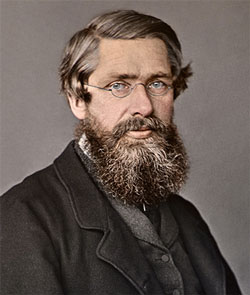
Alfred Russel Wallace was a 19th-century English surveyor, explorer, naturalist, social critic, and spiritist. However, he is far more renowned for having formulated a theory of evolution by natural selection ahead of Charles Darwin’s book Origin of Species.
Born at Monmouthshire, UK, in 1823, Wallace was educated at Hertford Grammar School until aged 13, when he had to withdraw due to family financial failure. A voracious reader, books on philosophy and rationalism soon undermined what little religious teaching he had absorbed in his teen years from having been sent to church on Sundays.
Concerning this church-going, he wrote in his 1905 autobiography: ‘[T]he only effect of this was to deepen my spirit of scepticism, as I found no attempt in any of the clergymen to reason on any of the fundamental questions at the root of the Christian and every other religion. … by the time I came of age [i.e. 21] I … could be best described by the modern term “agnostic”.’1 So even back then, many churches refused or were unable to defend the faith (1 Peter 3:15; Jude 3) and demolish contrary arguments (2 Corinthians 10:4–5).
At age 21, while temporarily employed at the Collegiate School in Leicester as a teacher of English, arithmetic, surveying and drafting, he saw his first demonstration of mesmerism, and found that he, too, could induce a similar hypnotic trance in some of his students. He referred to this as ‘psychical research’.2
The explorer
In the mid-1840s, Wallace read Charles Lyell’s Principles of Geology, which promoted the idea of long ages of Earth history, and Robert Chambers’ anonymously published Vestiges of the Natural History of Creation, which argued against biblical creation and promoted transmutation of species.
This inspired in him a desire to collect data to try and find a possible cause of biological evolution, and he decided to do this in South America after reading another book, A Voyage Up the Amazon River, by W.H. Edwards.
From 1848 to 1852 Wallace explored the middle Amazon and Rio Negro regions of South America. He ascended the Rio Negro system further than anyone else had done at that time, and drafted a map which proved accurate enough to become the standard for many years. In 1852, ill health caused him to return to England. The sailing-ship on which he was travelling caught fire and sank, taking with it all the specimens he had collected. After spending 10 days in a leaking lifeboat, he was rescued by a passing cargo-ship, and eventually returned home.
Wallace then decided to continue his natural-history collecting in the Indonesian islands of the Malay Archipelago. Here, from 1854 to 1862, he travelled 25,000 km, visiting every significant island, and collecting 125,660 specimens,3 including more than a thousand which were then new to science. He became the greatest living authority on the region.4
The ‘co-inventor’ of evolution by natural selection
In February 1858, at Ternate in the Molluccas, he had the experience for which he would become most famous. Wallace described it thus: ‘I was suffering from a sharp attack of intermittent fever, and every day during the cold and succeeding hot fits had to lie down for several hours … . Then it suddenly flashed upon me that … the fittest would survive. … I became convinced that I had at length found the long-sought-for law of nature that solved the problem of the origin of species. … I waited anxiously for the termination of my fit so that I might at once make notes for a paper on the subject. The same evening I did this pretty fully, and on two succeeding evenings wrote it out carefully in order to send it to Darwin’5 [with whom he had begun a cordial correspondence two years previously].
The paper was entitled ‘On the Tendency for Varieties to Depart Indefinitely from the Original Type’. Had Wallace sent it to a publisher, perhaps the world might now be talking about ‘Wallace-ism’ rather than Darwin-ism!
Crab-eating Macaque nursing
When Darwin received it, he was devastated. What he had been thinking about and putting off publishing for virtually all his working life, Wallace had done ‘while in a fit of delirium, in the space of a couple of hours between the onset of chills and their subsidence in a pool of sweat.’3
Darwin’s influential friends Charles Lyell and Sir Joseph Hooker immediately arranged for a joint presentation of Wallace’s paper and an abstract of an unpublished essay by Darwin written in 1844, plus an abstract of an 1857 letter from Darwin to the American botanist Asa Gray, to be read at a meeting of the Linnean Society on 1 July 1858.

This was a very dubious tactic, as Darwin later said that his two contributions ‘had neither been intended for publication, and were badly written’,6 and also it was done without Wallace’s knowledge or permission. However, it assured Darwin of a flimsy chronological priority. It also galvanized Darwin into putting together and publishing, in November 1859, his major work, On the Origin of Species. It also led people to think that Wallace was a full supporter of all Darwinian doctrines. In fact, he was not.
The Spiritist
To Darwin, man was just another evolved animal. Wallace, however, believed that man’s higher capacities such as the human spirit, the mind, and the faculties of speech, art, music, mathematics, humour and morality could not have arisen by natural and sexual selection alone. In an article published in the April 1869 issue of Quarterly Review, Wallace wrote:
‘Natural Selection could only have endowed the savage with a brain a little superior to that of an ape, whereas he actually possesses one but very little inferior to that of the average members of our learned societies.’7,8 When Darwin read this, he scribbled ‘No’ in the margin, underlined it three times, and added a shower of exclamation marks.
In the same article Wallace added, ‘… we must therefore admit the possibility, that in the development of the human race, a Higher Intelligence has guided the same laws [of variation, multiplication, and survival] for nobler ends.’7 Darwin was aghast. He wrote to Wallace, saying that he differed grievously from him,9 and in another letter said, ‘I hope you have not murdered too completely your own and my child.’10
Wallace’s ‘Higher Intelligence’ was not the Lord Jesus Christ, the Creator/Saviour God of the Bible,11 but some unidentified and unspecified ‘superior intelligence/power’.12 Wallace had become involved with spiritism and believed that departed souls could communicate through mediums with people living on Earth. In later life he ardently attended séances, where he believed he received messages from dead relatives.
Spiritism
Spiritism or necromancy (sometimes less accurately called spiritualism) is the belief that the living can communicate with the spirits of the dead. This supposedly happens in meetings called séances, through another human being, usually in a trance, called a medium.
Such a scenario obviously lends itself to trickery and fraud, as has been exposed from time to time by competent authorities.1,2 However, an even greater danger is the possibility that not all séances are fraudulent, and that the spiritist’s power is being drawn from demonic sources, deceptively masquerading as spirits of the dead.
In the Bible, consulting with demons to enquire about the future or to gain power over others etc. was called sorcery. Exodus records how the sorcerers and magicians of Egypt were able to duplicate some of Moses’ miracles ‘by their secret arts’ (Exodus 7:11, 22).3 Such practices were strictly forbidden to the people of God. Those who consulted mediums or spiritists (who were to be put to death—Leviticus 20:27) were under God’s curse (Leviticus 20:6).
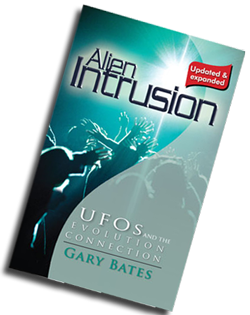
Today some people claim they have received messages from UFO entities, or extraterrestrial spirits, telling them they have been chosen ‘to spread the cosmic wisdom’. The process is called ‘channelling’. Perceived as an advanced method of communicating with supposedly ‘more highly evolved beings’, it is in fact just age-old occultic spiritism dressed up in modern garb. All this is explained by CMI’s Gary Bates, in his book Alien Intrusion: UFOs and the Evolution Connection.
References and notes
- E.g. Harry Houdini, see Encyclopaedia Britannica 6:81, 1992.
- Keene, M.L., The Psychic Mafia, St. Martin’s Press, New York, 1976 (confessions from the author’s ‘career of thirteen years as a fraudulent spiritualist medium’).
- Note that miracles are a sign of supernatural power, not necessarily of divine power.
The grand old man of miscellany
For the rest of his life, Wallace lectured widely and wrote many hundreds of essays, letters, reviews, and monographs on spiritism, scientific matters, social topics such as women’s right to vote (he was pro), vaccination (he was anti), life on Mars (anti), free trade, socialism, and economics, as well as many books. Wallace also used his surveying experience to win a public wager against flat-earther John Hampden, showing conclusively that the surface of a very straight six-mile stretch of the Old Bedford River was curved along its length (the Bedford Level experiment). He received honourary doctorates from the Universities of Dublin (1882) and Oxford (1889), as well as medals from several scientific societies. In the early 1900s, he was probably Britain’s best-known naturalist.
When Darwin was buried in Westminster Abbey on 26 April 1882, Wallace was one of the pall-bearers, along with Darwin’s other anti-Christian friends, Huxley and Hooker. Wallace died in 1913, aged 90, and on 1 November 1915, despite his self-confessed agnosticism and his occultic spiritism (clearly prohibited by God in the Bible) a medallion bearing his name was placed in Westminster Abbey.
Conclusion
Darwin realized that the full materialistic consequence of evolution was atheism,13 which was one reason why he had procrastinated over publishing his theory, until beaten to the start by Wallace. Wallace, on the other hand, wanted the comfort of ‘religion’ without accepting that the ‘superior intelligence’ of the universe is the Creator/Lawgiver/Judge and Saviour of the Bible.
Like many today, he wanted the solace of believing in a pleasant spiritual hereafter, without the need for a Saviour from sin, or the obligation to submit to the lordship of Jesus Christ in this life or the next.
Darwin and Wallace were both grievously in error, not only scientifically about evolution (for instance, neither they nor anyone since has ever shown how encyclopedic information can arise by any alleged evolutionary mechanism), but also in their different views of life after death. The Bible says, ‘… it is appointed unto men once to die, but after this the judgment’ (Hebrews 9:27). And ‘[God] has appointed a day on which He will judge the world in righteousness by the Man whom He has ordained. He has given assurance of this to all by raising Him from the dead’ (Acts 17:31). The good news is that the Resurrection of Jesus is also the assurance that we can know the forgiveness of our sins, and have life everlasting by believing in Him
Re-posted on homepage: 4 December 2013
References and notes
- Wallace, A., My Life, Chapman and Hall, London, 1:226–228, 1905. Return to text.
- Ref. 1, pp. 233–236. Return to text.
- 310 mammals, 100 reptiles, 8,050 birds, 7,500 land shells, 13,100 butterflies and moths, 83,200 beetles, and 13,400 ‘other insects’. Source: Harman, O.S., The Evolution of a Naturalist, American Scientist online, September–October 2004, wku.edu, accessed October 2004. Return to text.
- He was especially interested in zoogeography, and proposed that a hypothetical boundary, now known as ‘Wallace’s Line’, existed between the islands of Bali and Lombok, and Borneo and islands to the east, which marks the eastern extent of many Asian animals and the western extent of many Australasian ones (see Encyclopaedia Britannica 12:469, 1992). Return to text.
- Ref. 1, pp. 361–363. Return to text.
- Barlow, N., The Autobiography of Charles Darwin, Collins, London, pp. 121–122, 1958. Return to text.
- Wallace, A., Essay S146: 1869, titled ‘Sir Charles Lyell on Geological Climates and the Origin of Species’. Source: wku.edu, accessed January 2005. Return to text.
- Wallace may here be somewhat misrepresenting Darwin, who did not believe that direct selection was the sole source of evolutionary change. Later evolutionists argued that organs could be ‘pre-adapted’ for a different function to that which is later selected for. See Gould, S.J. and Lewontin, R.C., ‘The spandrels of San Marco and the Panglossian Paradigm: a critique of the adaptationist programme’, Proceedings of the Royal Society of London, Series B, 205(1161):581–598, 1979. Return to text.
- Letter from Darwin to Wallace, 14 April 1869. Return to text.
- Letter from Darwin to Wallace, March 1869. As this one was written just before the publication of Wallace’s Quarterly Review article, Darwin apparently had a good idea of what was coming. Return to text.
- See Grigg, R., Is Jesus Christ the Creator God? Creation 13(3):43–45, 1991. Return to text.
- Wallace, A., ‘Notes Added to the Second Edition of Contributions to the Theory of Natural Selection’ (S716: 1871). Source: wku.edu, accessed October 2004. Return to text.
- See Wieland, C., Darwin’s real message: have you missed it? Creation 14(4):16–19, 1992. Return to text.

Readers’ comments
Comments are automatically closed 14 days after publication.