

Journal of Creation 20(1):15, April 2006
Browse our latest digital issue Subscribe
CCR5-delta32: a very beneficial mutation
Cysteine-cysteine chemokine receptor 5 (CCR5) is found in the cell membranes of many types of mammalian cells, including nerve cells and white blood cells.1,2 The role of CCR5 is to allow entry of chemokines into the cell3—chemokines are involved in signaling the body’s inflammation response to injuries.4
The gene that codes for CCR5 is situated on human chromosome 3. Various mutations of the CCR5 gene are known that result in damage to the expressed receptor. One of the mutant forms of the gene is CCR5-delta32, which results from deletion of a particular sequence of 32 base-pairs. This mutant form of the gene results in a receptor so damaged that it no longer functions. But surprisingly, this does not appear to be harmful:
‘It’s highly unusual,’ says Dr. Stephen J. O’Brien of the National Institutes of Health in Washington D.C. ‘Most genes, if you knock them out, cause serious diseases like cystic fibrosis or sickle cell anemia or diabetes. But CCR5-delta32 is rather innocuous to its carriers. The reason seems to be that the normal function of CCR5 is redundant in our genes; that several other genes can perform the same function.’4
Moreover, this mutation can be advantageous to those individuals who carry it. The virus HIV normally enters a cell via its CCR5 receptors, especially in the initial stage of a person becoming infected.5 But in people with receptors crippled by the CCR5-delta32 mutation, entry of HIV by this means is blocked, providing immunity to AIDS for homozygous carriers and greatly slowing progress of the disease in heterozygous carriers.6–8
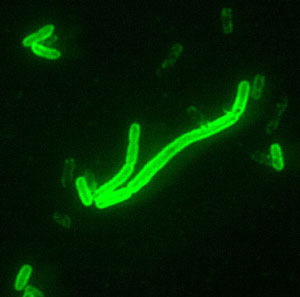
Up to 20%8 of ethnic western Europeans carry this mutation, which is rare or absent in other ethnic groups.9–11 This suggests that the CCR5-delta32 mutation was strongly selected for sometime during European history. Some researchers have proposed that the plague epidemics that repeatedly swept Europe during the Middle Ages were responsible.12 However, recent experiments in mice suggest that Yersinia pestis, the cause of plague, can infect mammalian cells by other means13–15 and so some scientists have proposed that smallpox, which is caused by the variola virus, was the selection agent that historically caused CCR5-delta32 carriers to proliferate in Europe.15
There has also been research suggesting that CCR5-delta32 hampers development of cerebral malaria from Plasmodium infection,16 and that it may slow progression of Multiple Sclerosis.17,18
With the advantage of providing full or partial immunity to certain diseases, and with no apparent disadvantages [But see Addendum March 2009. Ed.], CCR5-delta32 can be considered a prime example of a beneficial mutation—a mutation that decreases the information content of the genome and degrades the functionality of the organism, yet provides a tangible benefit.19
To date over 10,000 specific disease-causing mutations of the human genome have been identified.20 In contrast, only a handful of beneficial mutations have been discovered, none of which involve an increase in genetic information as required by evolution. All this is highly consistent with the biblical account of a very good creation21 followed by the Fall,22 and a subsequent six millennia23 of cumulative physical degeneration.24 However, it clashes irreconcilably with the evolutionary view that the accumulation of mutations over time brings about upward evolution (increasing functional complexity).
In God’s original creation, before the Fall and the Curse, the CCR5 receptor would not have constituted an entryway for pathogens. It may be that infectious agents like HIV only became pathogenic after degeneration from their original ‘very good’ created state. Or it may be that humans did not live in the same environment as such pathogens and so were just not exposed to them. Perhaps both these scenarios apply (see The origin of bubonic plague on p. 7). We look forward to God’s promised Restoration, when there will be no more mutation, disease or suffering.25
Addendum August 2007
‘A new generation of sophisticated therapies designed to HIV-proof the immune system promises to enter the clinic soon. For example, [Carl] June, working with Sangamo Bio-Sciences in Richmond, California, later this year plans to start trials in 12 HIV-infected people of a gene therapy designed to endow immune cells with a genetic mutation that protects them from HIV.To infect immune cells, HIV must first bind to chemokine receptors. Researchers discovered in 1996 that people who had a naturally occurring mutation in their genes for one of these, CCR5, were strongly protected from developing AIDS—or even becoming infected in the first place—and suffered no ill effects from lacking the receptor.
Sangamo specializes in developing enzymes called zinc finger nucleases that can bind to genes, clip their DNA, and repair mutations (Science, 23 December 2005, p. 1894). But for the HIV gene therapy, they’ve created a nuclease to specifically disrupt the CCR5 gene in the same manner as the natural mutation. In the new trial, researchers will put the gene for this zinc finger nuclease into an adenovirus vector, transduce harvested CD4+ T cells of HIV-infected people, and infuse those cells back. June says this is the first gene-therapy experiment that aims to create a phenotype that’s known to confer disease resistance.’26
Addendum March 2009
A reader alerted us to the fact that at least one drawback associated with this mutation has been found. The CCR5-delta32 mutation is strongly associated with a chronic and potentially life-threatening liver disease:
Eri, R, et al., CCR5-Delta 32 mutation is strongly associated with primary sclerosing cholangitis, Genes And Immunity 5(6):444–450, September 2004, http://www.nature.com/gene/journal/v5/n6/full/6364113a.html.
Addendum 12 December 2018
CCR5-delta32 not beneficial after all?
As to be expected time was not kind to the reputation of the CCR5-delta32 mutation. Once thought to have no negative side effects, further research uncovered both new functions performed by CCR5 and new risks associated with CCR5-Δ32. As far back as 2009 experts published a letter warning:
The CCR5 molecule has strong influences on the immune system. Besides its pro-inflammatory role, it is also a regulatory molecule (de Kleer et al., 2004; Ruprecht et al., 2005), having been reported to be involved in the T-cell memory compartment at both the levels of cell recruitment and cell differentiation (Chiesa et al., 2004; Gattorno et al., 2005).
… presence of this variant might be advantageous or disadvantageous depending on the situation (or pathogen).1
Their letter gave research details on over a dozen serious diseases which CCR5-Δ32 makes us more likely to catch and/or die from.
Despite a proliferation of further published research since then on the risks (and benefits) of CCR5-Δ32, one scientist undertook to permanently edit this mutation into living human genomes! See Gene editing babies? A dangerous, pointless experiment. In response to this, here is what two experts said about the ‘double-edged sword’ nature of CCR5-Δ32:
HIV takes advantage of it [CCR5], but its presence is important to the functioning of the immune system. … The infants’ engineered resistance to the AIDS virus may be a good thing in isolation, but in the greater scheme of things it also may make them susceptible to infections that a properly functioning immune system will defeat.
(Prof. Robert Brink of Garvan Institute of Medical Research)2Even if editing worked perfectly, people without normal CCR5 genes face higher risks of getting certain other viruses, such as West Nile, and of dying from the flu.
(Dr Kiran Musunuru, a University of Pennsylvania gene editing expert and editor of a genetics journal)3
This all goes to reinforce our biblical creationist perspective that living organisms are phenomenally complex, mutations mainly damage information, and adaptations that may be advantageous in a particular special environment (e.g. the presence of a particular disease) are still likely to be disadvantageous generally.
References
- Vargas, A.E. and 9 others, Pros and cons of a missing chemokine receptor, Infection, Genetics and Evolution 9(2009):387–389, 2009 | doi:10.1016/j.meegid.2009.01.001.
- Quoted and paraphrased in: Walker, J., Eugenics out of the bottle, The Weekend Australian, 1–2 December 2018, p. 17.
- Quoted in: Marchione, M., Chinese researcher claims first gene-edited babies, Associated Press, apnews.com/4997bb7aa36c45449b488e19ac83e86d, 27 November 2018.
References
- McKusick, V.A., Online Mendelian Inheritance in Man, OMIM (TM), Johns Hopkins University, Baltimore, Maryland, MIM Number: 601373, www.ncbi.nlm.nih.gov/entrez/dispomim.cgi?id=601373, 11 January 2006. Return to Text.
- Rottman, et al., Cellular localization of the chemokine receptor CCR5: correlation to cellular targets of HIV-1 infection, The American Journal of Pathology 151(5):1341–1351, 1997. Return to Text.
- CCR5 occurs in conjunction with CD4 (cluster designation 4) receptors. Together they comprise a ‘portal’. For a biological factor to enter the cell via this portal, it must be able to chemically bind to both these coreceptors—See diagram and explanation on page 7 of: Klatt, E.C., Pathology of Aids Version 18, medlib.med.utah.edu/WebPath/AIDS2007.PDF, 1 November 2007. Return to Text.
- Secrets of the Dead: Mystery of the Black Death, http://www.pbs.org/wnet/secrets/case_plague/interview.html, 9 February 2006. Return to Text.
- Kawamura, et al., R5 HIV productively infects Langerhans cells, and infection levels are regulated by compound CCR5 polymorphisms, Proceedings of the National Academy of Sciences of the USA 100(14):8401–8406, 2003. Return to Text.
- Generally homozygous individuals are completely immune, but there may be exceptions. Return to Text.
- Zagury, et al., C-C chemokines, pivotal in protection against HIV type 1 infection, Proceedings of the National Academy of Sciences of the USA 95(7):3857–3861, 1998. Return to Text.
- Liu, et al., Homozygous defect in HIV-1 coreceptor accounts for resistance of some multiply-exposed individuals to HIV-1 infection, Cell 86(3):367–377, 9 August 1996. Return to Text.
- Zimmerman, et al., Inherited resistance to HIV-1 conferred by an inactivating mutation in CC chemokine receptor 5: studies in populations with contrasting clinical phenotypes, defined racial background, and quantified risk, Molecular Medicine 3(1):23–36, 1997. Return to Text.
- Stephens, et al., Dating the origin of the CCR5-del32 AIDS-resistance allele by the coalescence of haplotypes, American Journal of Human Genetics 62(6):1507–1515, June 1998. Return to Text.
- Majumder and Dey, Absence of the HIV-1 protective del-ccr5 allele in most ethnic populations of India, European Journal of Human Genetics 9(10):794–796, October 2001. Return to Text.
- Duncan, et al., Reappraisal of the historical selective pressures for the CCR5-delta32 mutation, Journal of Medical Genetics 42(3):205–208, March 2005. Return to Text.
- Elvin, et al., Ambiguous role of CCR5 in Y. pestis infection, Nature 430(6998):417, 22 July 2004. Return to Text.
- Mecsas, et al., CCR5 mutation and plague protection, Nature 427(6998): 606, 22 July 2004. Return to Text.
- Galvani, A. P.and Slatkin, M., Evaluating plague and smallpox as historical selective pressures for the CCR5-delta-32 HIV-resistance allele, Proceedings of the National Academy of Sciences of the USA 100(25):15276–15279, 9 December 2003. Return to Text.
- Belnoue, et al., CCR5 deficiency decreases susceptibility to experimental cerebral malaria, Blood 101(11):4253–4259, 2003. Return to Text.
- Barcellos, et al., CC-chemokine receptor 5 polymorphism and age of onset in familial multiple sclerosis, Immunogenetics 51(4–5):281–288, 2000. Return to Text.
- Kantor, et al., A mutated CCR5 gene may have favorable prognostic implications in MS, Neurology 61(2):238–240, 2003. Return to Text.
- For another example of a highly beneficial mutation, see: Wieland, C., Beetle bloopers: Even a defect can be an advantage sometimes, Creation 19(3):30, 1997; creation.com./beetle. For more on mutations, see: creation.com/mutations. Return to Text.
- Online Mendelian Inheritance in Man, OMIM (TM), Johns Hopkins University, Baltimore, Maryland, OMIM Statistics, http://omim.org/statistics/geneMap for 18 January 2006. Return to Text.
- Genesis 1:31. Return to Text.
- Genesis 3. Return to Text.
- Sarfati, J., Biblical chronogenealogies, Journal of Creation 17(3):14–18, 2003; creation.com/chronogenealogies. Return to Text.
- Psalm 102:25–26; Hebrews 1:10–12; Romans 8:22. Return to Text.
- Revelation 21:4; 22:3. Return to Text.
- Cohen, J., Building an HIV-proof immune system, Science 317(5838):612–614, http://www.sciencemag.org/cgi/content/summary/317/5838/612, 3 August 2007; page 613. Return to Text.


Readers’ comments
Comments are automatically closed 14 days after publication.