
Science, Creation and Evolutionism

Response to the latest anticreationist agitprop from the US National Academy of Sciences (NAS), Science, Evolution, and Creationism
8 February 2008; last updated 20 July 2021
Table of contents
1. Does science need evolution?
- Does medicine need evolution?
- Agriculture and evolution?
- Evidence for common ancestry: homologies?
- Evolution of mankind?
- Whale evolution?
- Molecular evidence?
- Evolution in action?
- Mutations and evolution of bodily changes
- Evolution of bodily changes: Hox genes?
- Gene duplication
- Have claims of intelligent design been refuted?
- Eye
- Practical application of evolution?
- Evolution v biology
- Origin of first life; Chemical evolution
- Problems with panspermia
- Cosmic evolution?
- How old is the Earth?
- Self-serving SEC definitions of ‘science’
2. Is evolution compatible with religion?
Appendix: Education and legal issues

With much publicity, the NAS has launched yet another glossy anticreationist 88-page booklet, Science, Evolution and Creationism (SEC). This is actually a revised and expanded version of a 1984 publication, Science and Creationism, updated in 1999. This year’s update was much praised by such well known antichristian science journals as Nature and New Scientist. A decade ago, the NAS launched a teacher’s guidebook, Teaching about Evolution and the Nature of Science. My first book, Refuting Evolution (RE), was a detailed rebuttal to this.
There is nothing really new in SEC that would disturb those familiar with RE or its sequel, Refuting Evolution 2 (RE2), or who are regular readers of Creation magazine and the associated Journal of Creation. But SEC seems directed to more naïve members of the general public to try to poison them against even considering creationist materials. Thus it knocks down straw man arguments and uses logical fallacies that the authors must realize are just that. A major feature is trying to scare readers into believing that creation is a threat to science.
This book also seems to target church leaders, to try to assure them that evolution is no threat to their faith. Materialists have long used compromising churchians as ‘useful idiots’, the phrase Lenin used of his dupes in the west who inadvertently undermined their own foundations. That is, they convince church leaders that evolution and the Bible are compatible, and just let these leaders inadvertently give the impression that ‘science’ trumps the Bible when it comes to Earth history. Then they sit back and wait as young people leave the church in droves.
These young people are really just being more consistent; if science trumps the Bible in history, then why not everywhere else? And for six hours a day, five days a week, they are taught a history of the world that ignores God, and are actually indoctrinated into a rival religion, secular humanism. So the Bible becomes superfluous, and they leave the church as soon as they are out from under their parents’ roof. Meanwhile, their leaders wring their hands at the hemorrhaging of young people from their flock, oblivious to their own role in the matter. And others don’t seem to want answers, as described in The Indoctrinator.
This booklet aims to provide specific answers to the latest NAS agitprop. In many cases, these are in CMI’s previously published literature. The three main sections are Science, which mainly concerns biological evolution but also includes chemical and cosmic evolution, and the philosophy of science; Religion, including claims of non-overlap and non-conflict; and Legal/Educational Issues, including court cases and creation in schools. SEC text is in dark red.
1. Does science need evolution?
The Preface starts:
Scientific and technological advances have had profound effects on human life. In the 19th century, most families could expect to lose one or more children to disease. Today, in the United States and other developed countries, the death of a child from disease is uncommon. Every day we rely on technologies made possible through the application of scientific knowledge and processes. The computers and cell phones which we use, the cars and airplanes in which we travel, the medicines that we take, and many of the foods that we eat were developed in part through insights obtained from scientific research. Science has boosted living standards, has enabled humans to travel into Earth’s orbit and to the Moon, and has given us new ways of thinking about ourselves and the universe.
Evolutionary biology has been and continues to be a cornerstone of modern science.
It is notable that the booklet starts by extolling the virtues of science, and by implication arguing that creationists are a threat to this. But it is not hard to notice that most of the scientific advances haven’t the slightest thing to do with evolution. Computers, cell phones, airplanes, and the moon landings certainly don’t! Indeed, they largely depended on creationist scientists:
- The creationist Robert Boyle (1627–1691) fathered modern chemistry and demolished the Aristotelian four-elements theory. He also funded lectures to defend Christianity and sponsored missionaries and Bible translation work.
- Cell phones depend on electromagnetic radiation theory, which was pioneered by creationist James Clerk Maxwell (1831–1879)
- Computing machines were invented by Charles Babbage (1791–1871), who was not a biblical creationist but was a creationist in the broad sense. He ‘believed that the study of the works of nature with scientific precision, was a necessary and indispensable preparation to the understanding and interpreting their testimony of the wisdom and goodness of their Divine Author.’
- The creationist brothers Orville (1871–1948) and Wilbur Wright (1867–1912) invented the airplane after studying God’s design of birds.
- The theory of planetary orbits was invented by Johannes Kepler (1571–1630), famous for claiming that his discoveries were ‘thinking God’s thoughts after him’. Kepler also calculated a creation date of 3992 BC, close to Ussher’s.
- The theory of gravity and the laws of motion, essential for the moon landings, was discovered by the creationist Isaac Newton (1642/3–1727).
- The moon landing program was headed by Wernher von Braun (1912–1977), who believed in a designer and opposed evolution. And a biblical creationist, James Irwin (1930–1991), walked on the moon. See also Exploring the heavens: Interview with NASA scientist Michael Tigges.
Some have claimed that most of these scientists would have been evolutionists had they known about Darwin. This is hypothetical and question-begging, and doesn’t explain the creationists who were contemporaneous with Darwin or lived after him. See also Newton was a creationist only because there was no alternative?
In RE ch. 1, I explain more about the origins of modern science, and how evolution has nothing to do with it. This chapter also differentiates the operational science that should be credited with the advances SEC rightly praises, from the sort of science that deals with questions of origins.
RE2 ch. 1 points out that America led the world in the number of Nobel prizes awarded, including in biology, before evolution was part of the school curriculum. And the Apollo moon landings were achieved by scientists and engineers educated under the same curriculum.
Does medicine need evolution?
But what about the biology-based science that SEC rightly credits with the vast drop in losses of children to disease? No joy here to the evolutionists either. Many of the most important medical advances were made without the slightest use being made of evolution:
- Vaccination was discovered by Edward Jenner (1749–1823—note that Darwin published Origin in 1859)
- Antisepsis by Joseph Lister, creationist (1827–1912)
- Anaesthesia by James Young Simpson (1811–1870), who believed that God was the first anaesthetist, citing Genesis 2:21.
- Germ theory of disease by Louis Pasteur, creationist (1822–1895), who disproved spontaneous generation, still an evolutionary belief.
- Antibiotics, developed without the slightest input of evolution, by the serendipitous discovery by Alexander Fleming (1881–1955), who had previously discovered lysozyme, the ‘body’s own antibiotic’. And Ernst Chain (1906–1979), who shared the 1945 Nobel Prize for Physiology and Medicine with Fleming (and Howard Florey (1898–1968)) for discovering penicillin, was a devout Orthodox Jew and anti-Darwinian. His biography noted ‘Chain’s dismissal of Darwin’s theory of evolution’, and his belief that ‘evolution was not really a part of science, since it was, for the most part, not amenable to experimentation—and he was, and is, by no means alone in this view’. As an understanding of the development of life, Chain said, ‘a very feeble attempt it is, based on such flimsy assumptions, mainly of morphological-anatomical nature that it can hardly be called a theory.’ And speaking of certain evolutionary examples, he exclaimed, ‘I would rather believe in fairies than in such wild speculation.’1
- Insulin: its vital function was first discovered by the creationist Nicolae Paulescu (1869–1931), who named it ‘pancreine’. He anticipated the discoveries of Frederick Banting and John Macleod, who were awarded the 1923 Nobel Prize for Medicine for their work on insulin. See Denied the prize.
In modern times, we have the outspoken biblical creationist Raymond Damadian (1936–), inventor of the Magnetic Resonance Imaging (MRI) scanner, and Graeme Clark (1935–), the inventor of the Cochlear bionic ear who is a Christian.
But SEC has a box that discusses one particular disease, SARS:
Evolution in medicine: combating new infectious diseasesIn late 2002 several hundred people in China came down with a severe form of pneumonia caused by an unknown infectious agent. Dubbed ‘severe acute respiratory syndrome’, or SARS, the disease soon spread to Vietnam, Hong Kong, and Canada and led to hundreds of deaths. In March 2003 a team of researchers at the University of California, San Francisco, received samples of a virus isolated from the tissues of a SARS patient.
Using a new technology known as a DNA microarray, within 24 hours the researchers had identified the virus as a previously unknown member of a particular family of viruses—a result confirmed by other researchers using different techniques.
Immediately, work began on a blood test to identify people with the disease (so they could be quarantined), on treatments for the disease, and on vaccines to prevent infection with the virus.
An understanding of evolution was essential in the identification of the SARS virus. The genetic material in the virus was similar to that of other viruses because it had evolved from the same ancestor virus. Furthermore, knowledge of the evolutionary history of the SARS virus gave scientists important information about the disease, such as how it is spread. Knowing the evolutionary origins of human pathogens will be critical in the future as existing infectious agents evolve into new and more dangerous forms.
Certainly combating the SARS virus was great medical science, but was evolution really necessary? Even if they were right, all they found was a virus changing into a virus, which says nothing about how viruses might have evolved into virologists. It also says nothing about how viruses could have originated in the first place. They are incapable of independent reproduction, but are still very sophisticated, including a powerful miniature motor to wind up DNA. See also SARS and evolution: A new virus doesn’t that show evolution?
But this whole piece is an example of the usual evolutionary fallacy of equivocation, or playing bait-and-switch with the term ‘evolution’: using the term to mean any sort of change, which no creationist doubts, then using evidence for this ‘evolution’ to prove the ‘goo to you via the zoo’ theory, which is what SEC is really all about. The important point is that the latter requires new genes with new information; while most of the ‘proofs’ of evolution in SEC are nothing of the kind. So the ‘evidence’ that SEC adduces for ‘evolution’ cannot be extrapolated for millions of years, since it involves the wrong type of change, in the wrong direction. See for example, Definitions as slippery as eels, as well as RE2 ch. 4.
The claim that ‘existing infectious agents evolve into new and more dangerous forms’ is also fallacious. Once again, there are a number of ways that virulence could arise that have nothing to do with the changes required to turn germs into gymnasts. Some of them are discussed in RE2 ch. 4, under ‘Evolution of Pathogens’.
SEC also discusses antibiotic resistance as an example of evolution:
However, natural selection also can have radically different evolutionary effects over different timescales. Over periods of just a few generations (or, in some documented cases, even a single generation), evolution produces relatively small-scale microevolutionary changes in organisms. For example, many disease-causing bacteria have been evolving increased resistance to antibiotics. When a bacterium undergoes a genetic change that increases its ability to resist the effects of an antibiotic, that bacterium can survive and produce more copies of itself while nonresistant bacteria are being killed. Bacteria that cause tuberculosis, meningitis, staph infections, sexually transmitted diseases, and other illnesses have all become serious problems as they have developed resistance to an increasing number of antibiotics.
As usual, we have already shown why antibiotic resistance has nothing to do with bacteria-to-biologists evolution. In most cases, the resistance was already present, and the antibiotic knocks out the non-resistant forms. So there is indeed natural selection, but not evolution.
As SEC says, sometimes a genetic change can cause resistance, but even these changes are akin to scorched earth war, where things the enemy can exploit are destroyed, rather than new machinery arising. E.g. antibiotic resistance is in one sense a war between the germs and the fungi that produce the antibiotic. Sometimes the fungus uses the germ’s own machinery against them—they produce an antibiotic that the germ’s own machines (enzymes) turn into a poison, killing the germ. But if the germ has a mutation that disables the machine, the antibiotic is rendered harmless. But this germ is still disabled, and could not compete with the germs outside the hospital. See again RE2 ch. 4, under Resistance, and Anthrax and antibiotics: Is evolution relevant?
See also Is evolution really necessary for medical advances?
Agriculture and evolution?
In another attempt to make evolution sound essential, SEC has the following box:
Evolution in agriculture: the domestication of wheatWhen humans understand a phenomenon that occurs in nature, they often gain increased control over it or can adapt it to new uses. The domestication of wheat is a good example.
By recovering seeds from different archaeological sites and noticing changes in their characteristics over the centuries, scientists have hypothesized how wheat was altered by humans over time. About 11,000 years ago, people in the Middle East began growing plants for food rather than relying entirely on the wild plants and animals they could gather or hunt.
These early farmers began saving seeds from plants with particularly favorable traits and planting those seeds in the next growing season. Through this process of ‘artificial selection’, they created a variety of crops with characteristics particularly suited for agriculture. For example, farmers over many generations modified the traits of wild wheat so that seeds remained on the plant when ripe and could easily be separated from their hulls. Over the next few millennia, people around the world used similar processes of evolutionary change to transform many other wild plants and animals into the crops and domesticated animals we rely on today.
In recent years, plant scientists have begun making hybrids of wheat with some of their wild relatives from the Middle East and elsewhere. Using these hybrids, they have bred wheat varieties that are increasingly resistant to droughts, heat, and pests.
Most recently, molecular biologists have been identifying the genes in the DNA of plants that are responsible for their advantageous traits so that these genes can be incorporated into other crops. These advances rely on an understanding of evolution to analyze the relationships among plants and to search for the traits that can be used to improve crops.
First, it is not surprising that archaeologists would find that the earliest agricultural evidence comes from the middle east. According to the Bible, this is where the first post-Flood people settled before they were dispersed at Babel (Genesis 11). However, the dates that SEC asserts are based on assumptions; the historical records of Genesis show that this agriculture can be no older than c. 2500 BC.
Second, many of the advances in agriculture predated Darwin by millennia. Darwin was far from the first to recognize the principles of selection; he just thought that it could change microbes to man. The real science of selection, demonstrated above, merely results in varieties of the same kind. The reason is that selective processes weed out unwanted characteristics, while Darwinian evolution requires new characteristics.
E.g. in the example given, farmers could select only the wheat seeds that best stayed on the plant after ripening, and exclude the others. They would repeat the process for the next generation, until all their wheat seeds stayed on the plant. This is the same process in principle as the illustration of the breeding of long-furred dogs in Refuting Evolution, ch. 2.
Third, SEC inadvertently supports the above with the discussion of hybridizing with the wild type. The problem with selection is that it must work on the whole organism. If a farmer wanted large wheat grains, say, he would exclude small seeds from his next crop. But by doing this, he would also be excluding all the genetic information they carried, not just the information for smallness. This may include information for the resistance that SEC mentions. So this selection process is informationally downhill, the opposite to that required for goo-to-you evolution. So it’s no accident that there are seed banks for the wild types of a number of plants, but this is to preserve already existing information, not generate new information.
In any case, most of the methods of agriculture were developed well before Darwin, such as animal breeding and horticulture. Even the advances after Darwin had nothing to do with his theories, e.g. mechanization, fertilizers, improved storage and refrigeration.
Evidence for common ancestry: homologies?
Homologies, or similarities supposedly due to common ancestry, often comes up in evolutionary agitprop, and SEC is no exception:
… all organisms share some common traits because they all share common ancestors at some point in the past. For example, based on accumulating fossil and molecular evidence, the common ancestor of humans, cows, whales, and bats was likely a small mammal that lived about 100 million years ago. The descendants of that common ancestor have undergone major changes, but their skeletons remain strikingly similar. A person writes, a cow walks, a whale swims, and a bat flies with structures built of bones that are different in detail but similar in general structure and relation to each other.
Evolutionary biologists call similar structures that derive from common ancestry ‘homologies’. Comparative anatomists investigate such homologies, not only in bone structure but also in other parts of the body, and work out evolutionary relationships from degrees of similarity.

Only in the case of a created kind, e.g. we agree that tigers and lions share a common ancestor, as do false killer whales and dolphins. See Ligers and wholphins? What next? Crazy mixed-up animals what do they tell us? They seem to defy man-made classification systems but what about the created kinds in Genesis? But many organisms share similarities that evolutionists concede could not possibly have come from a common ancestor, called homoplasies. See for example the discussion on Tiktaalik’s limbs, since SEC makes much of the new fossil fish Tiktaalik as an alleged missing link. The pattern of similarities in biology supports The Biotic Message. That is, the evidence from nature points to a single designer (the similarities in general), but with a pattern that thwarts evolutionary explanations (the similarities that could not be due to common ancestry). Also, in most cultures that have ever existed, a common design would bring great honour to the designer, showing his mastery over what he had made—see Not to Be Used Again : Homologous Structures and the Presumption of Originality as a Critical Value.
RE2 ch. 6 deals with such homologies and why they are not evidence for common ancestry but a common designer. See also Does homology provide evidence of evolutionary naturalism?
SEC also contains a diagram similar to that in The horse shows that similarities are due to creation, with the following caption:
The bones in the forelimbs of terrestrial and some aquatic vertebrates are remarkably similar because they have all evolved from the forelimbs of a common ancestor. This is an example of homologous structures.
The common pattern is often referred to as pentadactyl (5-digits), and this is explained by common ancestry from a 5-digited creature. Yet the nearest creatures that evolutionists propose as common ancestors did not have five digits! Acanthostega had eight, while Ichthyostega had seven.
Evolution of mankind?
Naturally SEC has to say something about man’s supposed animal ancestry.
Biological evolution explains the origin and history of our speciesStudy of all the forms of evidence discussed earlier in this booklet has led to the conclusion that humans evolved from ancestral primates. In the 19th century, the idea that humans and apes had common ancestors was a novel one, and it was hotly debated among scientists in Darwin’s time and for years after.
However, Darwin wasn’t the first.
But today there is no scientific doubt about the close evolutionary relationships between humans and all other primates.
Yet NAS elsewhere claims that science is supposed to be tentative …
Using the same scientific methods and tools that have been employed to study the evolution of other species, researchers have compiled a large and increasing number of fossil discoveries and compelling new molecular evidence that clearly indicate that the same forces responsible for the evolution of all other life forms on Earth account for the biological evolution of human characteristics.
However, the evidence indicates a big difference between humans and their alleged australopithecine ancestors. The analysis of a number of characteristics2 indicates that Homo ergaster, H. erectus, H. neanderthalensis as well as H. heidelbergensis, were most likely ‘racial’ variants of modern man. Conversely, many specimens classified as H. habilis and another specimen called H. rudolfensis were just types of australopithecines (extinct apes).3 The data don’t indicate transitional features or even mosaic evolution.
Summary of the results of analyses of characteristics of fossil Homo species [After Table 7 in Ref. 2]. 1) body size, 2) body shape, 3) locomotion, 4) jaws and teeth, 5) development and 6) brain size. H = like modern humans, A = australopith-like, I = intermediate ? = data unavailable.
| Species name | 1 | 2 | 3 | 4 | 5 | 6 |
| H. rudolfensis | ? | ? | ? | A | A | A |
| H. habilis | A | A | A | A | A | A |
| H. ergaster | H | H | H | H | H | A |
| H. erectus | H | ? | H | H | ? | I |
| H. heidelbergensis | H | ? | H | H | ? | A |
| H neanderthalensis | H | H | H | H | H | H |
There is also a huge difference between humans and apes in language capacity, as explained in RE2 ch. 6.
Based on the strength of evidence from DNA comparisons, the common ancestor of humans and chimpanzees lived approximately 6 to 7 million years ago in Africa.
But this is based on the ‘molecular clock’ concept, which is predicated on circular reasoning, since the dates of assumed splits from hypothetical ancestors are used to calibrate the ‘clock’ in the first place. The prominent evolutionist Svante Páábo, referring to such ‘date’ assessments from genetic comparisons, said that they ‘have errors of unknown magnitude associated with them’. See Recovery of Neandertal mtDNA: an evaluation. For insight into the fanciful story-telling that passes as the dating of the fossils of supposed human ancestors, see The Pigs Took it All.
The evolutionary tree leading from this ancestral species to modern humans contains a number of side branches, representing populations and species that eventually went extinct. At various times in the past, the planet appears to have been populated by several human-like species.
Evolutionists love to talk about how similar human and chimp DNA is. The actual amount often depends on who’s telling the story. More recently, informed evolutionists have abandoned the idea of 99% DNA similarity between humans and chimps. But let’s grant the 1% difference—it would mean a huge 30 million ‘letters’ difference. This is thousands of times too many for random mutation and natural selection to produce even in the alleged 6–7 million years—see Haldane’s Dilemma has not been solved.
We have also pointed out in the above article:
- In 2005, scientists discovered that the chimpanzee genome was 12% larger than the human genome.4
- In 2003, scientists calculated a 13.3% difference in sections of our immune systems.5
- One study has even revealed a 17.4% difference in gene expression in the cerebral cortex.6
About 4.1 million years ago, a species appeared in Africa that paleontologists place in the genus Australopithecus, which means ‘southern ape.’ (A member of the genus was first discovered in southern Africa, although other fossils, including an almost complete skeleton of a 3-year-old female, have been found in eastern Africa.)
Yes, the name is apt, since they were a distinct kind of ape, and would certainly be called that colloquially by anyone today who could see a living specimen.
The brain of an adult of this genus was about the same size as that of modern apes (as documented by the size of fossil skulls), and it appears to have spent part of its life climbing in trees, as indicated by its short legs and features of its upper limbs. But Australopithecus also walked upright, as humans do.
Yet this is contrary to evidence from Lucy’s upper limb bones that her species (Australopithecus afarensis) could lock its wrists just as modern apes can, suggesting that Lucy was a knuckle walker in a similar way.7
Footprints left by one of the earliest Australopithecus species have been discovered preserved with remarkable clarity in hardened volcanic ash.
They illustrated this claim with an illustration with the caption:
More than 3.5 million years ago, two hominids walked upright across a field of newly fallen volcanic ash in eastern Africa. The footprints were covered by a subsequent ashfall until 1978, when they were unearthed by paleontologists. The Laetoli footprints, named after the site where they were found, are very early evidence of upright walking, a key acquisition in the lineage leading to humans.
However, there is no evidence that australopithecines actually made these prints. But since they are dated at millions of years prior to when evolutionists believe modern humans arrived, they are regarded as australopithecine prints, by definition, even though australopithecine foot bones are substantially different from human ones. And then in an amazing twist, the same prints are held up as evidence that australopithecines walked upright like humans—regardless of the fact that other aspects of their anatomy indicate otherwise. The actual footprints, according to the evolutionist Russell Tuttle of the University of Chicago are the same sorts of prints as made by habitually barefoot humans:
‘In discernible features, the Laetoli G prints are indistinguishable from those of habitually barefoot Homo sapiens.’8
With a colleague, he wrote:
‘Casts of Laetoli G-1 and of Machiguenga footprints in moist, sandy soil further illustrate the remarkable humanness of Laetoli hominid feet in all detectable morphological features.’9
About 2.3 million years ago, the earliest species of Homo, the genus to which all modern humans belong, evolved in Africa. This species is known as Homo habilis (‘handy’ or ‘skillful man’). Its average brain size, as determined from skulls that postdate 2 million years ago, was probably about 50 percent larger than that of earlier Australopithecus. The earliest stone tools appear about 2.6 million years ago.
For some years now, many evolutionist specialists have agreed that H. habilis was probably always a phantom taxon, with a bag of fossils belonging to either H.erectus/ergaster or to australopithecines thrown into this ‘taxonomic wastebin’. This expression was used in an interview with Dr Fred Spoor, a Dutch-born paleoanthropologist in the UK, and joint editor of the Journal of Human Evolution.10
About 1.8 million years ago, a more evolved species, Homo erectus (‘upright man’) appeared. This species spread from Africa to Eurasia. The subsequent fossil record includes the skeletal remains of additional species within the genus Homo. The more recent species generally had larger brains than the earlier ones.
However, this was most likely just a variety of human. Also, their cranial vault size overlapped with that of modern people.11 Further, a new specimen from Java, where Homo erectus was first discovered, ‘disproves an [evolutionary] hypothesis about the development of the large brains of our own species.’12 It was shown to have a ‘strikingly modern feature’,12 a strongly bent or ‘flexed’ cranial base. The paleoanthropologist Dan Lieberman of Harvard University said:
‘This is an important find because it is the first H. erectus find with a reasonably complete cranial base, and it looks modern.’12
Of course, Lieberman would see H. erectus as a human ancestor, but this evidence is consistent with H. erectus being just a variant of the human created kind.
And as recently as 12 Jan 2001, Wolpoff et al. showed that the features of various human skulls indicated that there must have been interbreeding among modern-looking Homo Sapiens and Neanderthals and even Homo erectus.13
Their cultural abilities are also strong evidence of their humanity. They even had evidence of seafaring skills! This was shown by butchered elephant bones on a small Indonesian island, too small and resource-poor to sustain a settlement, with tools and dating that identify ‘H. erectus’ as the only candidate (in evolutionists’ minds) for the butcher, but the island had to be reached by boat over quite a stretch of deep water.14,15,16 Thus there must have been migration of H. erectus from island to island, across straits ranging in size from several kilometres to a few tens of kilometres, and quite deep water. The islands involved in this peregrination included Lombok, Bali, Sumbawa, and Flores.17 Clearly, H. erectus must have crossed the straits that separate the islands, and this implies at least some seafaring ability. And according to conventional dates, this happened some 800,000 years ago. The original researchers say:
‘Furthermore, they [our findings] indicate that, somewhere between 800,000 and 900,000 years ago, Homo erectus in this region had acquired the capacity to make water crossings.’13
The seafaring skills of H. erectus were also highlighted by the noted ‘multi-regional’ advocate Wolpoff as support for his views. Interestingly, the ardent advocate of the rival ‘out of Africa’ theory Chris Stringer said that these seafaring skills would be evidence that H. erectus ‘was more human, just like us’. (See explanation of both theories.)
Evidence shows that anatomically modern humans (Homo sapiens—’wise’ or ‘knowing man’) with bodies and brains like ours, evolved in Africa from earlier forms of humans. The earliest known fossil of a modern human is less than 200,000 years old. The members of this group dispersed throughout Africa and, more recently, into Asia, Australia, Europe, and the Americas, replacing earlier populations of humans then living in some parts of the world.
So NAS relies upon the ’out of Africa’ or ‘Noah’s Ark’ hypothesis, which is far from universal even among evolutionary paleoanthropologists.
Whale evolution?
Another favourite of evolutionary propagandists in the last decade or so is the alleged series from land mammal to whale. It matters not that the story keeps changing. Here is the current NAS effort:
The Evolution of Whales, Dolphins, and PorpoisesThe combination of fossil and molecular evidence enables biologists to construct much more detailed evolutionary histories than have been possible in the past. For example, recent fossil discoveries in Asia have revealed a succession of organisms that, beginning about 50 million years ago, moved from life on land first to hunt and then to live continuously in marine environments. This fossil evidence accords with recent genetic findings that whales, dolphins, and porpoises are descended from a group of terrestrial mammals known as artiodactyls, which today includes such animals as sheep, goats, and giraffes.
In their previous work, Teaching about Evolution and the Nature of Science, NAS claimed that whales evolved from mesonychids (see RE ch. 5), but the story has since changed to artiodactyls. So the supposedly overwhelming evidence of mesonychid ancestry had to be explained away. That is, supposedly homologous features of mesonychids and whales, attributed to common ancestry despite the problems with this, had to later be explained away as homoplastic/convergent, i.e. having nothing to do with common ancestry.
Most recently, studies of regulatory networks in the DNA of modern porpoises have revealed the molecular changes that caused the ancestors of these organisms to lose their hind limbs and develop more streamlined bodies. All of these forms of evidence support each other and add fascinating details to the understanding of evolution.
We are evidently supposed to take their word for that. It’s more likely that this is a garbled account of dolphins supposedly found with legs, which turned out to be fins—see A dolphin with legs NOT.
SEC illustrates this with a picture with the caption:
Fossils of Dorudon, found in Egypt and dating to approximately 40 million years ago, document a critical transition in the evolution of modern whales. Because it had evolved from a mammal that lived on land, Dorudon still had vestigial traces of hind limbs, feet, and toes (the small bones at the base of the tail), even though it lived in the water and used its long powerful tail to swim.
The Dorudon was once classified as a juvenile Basilosaurus, since they are very similar long, slender marine mammals, but Dorudon was 5 m long and Basilosaurus 18 m. They are now classified as separate subfamilies of Basolosauridae. They are most likely varieties of the same created kind, much as the false killer whale (Pseudorca crassidens) and a bottlenose dolphin (Tursiops truncatus) are the same biological species given that they can produce a fertile hybrid called a wholphin.
Much the same can be said about Dorudon as was already said about Basilosaurus in RE ch. 5: the serpentine body structure, cheek teeth and nasal bones mean that it could not have been an ancestor to modern whales. Also, the allegedly vestigial hind limbs actually had an important function as reproductive claspers.
Molecular evidence?
Much has happened in evolutionary biology since the release of the first two editions of this booklet, and this new edition provides important updates about these developments.
Including changes that invalidated some of their claims in the first two booklets!
Fossil discoveries have continued to produce new and compelling evidence about evolutionary history. New information and understanding about the molecules that make up organisms has emerged, including the complete DNA sequences of humans. DNA sequencing has become a powerful tool for establishing genetic relationships among species. DNA evidence has both confirmed fossil evidence and allowed studies of evolution where the fossil record is still incomplete. An entirely new field, evolutionary developmental biology, enables scientists to study how the genetic changes that have occurred throughout history have shaped the forms and functions of organisms. The study of biological evolution constitutes one of the most active and far-reaching endeavors in all of modern science.
This nice story fails the test though. One evolutionary paper admits:
‘Molecular data and the fossil record can give conflicting views of the evolutionary past.’18
And another recent example was the discovery that the DNA similarities suggest that ‘bats seem to be more closely related to horses than cows are’19—see Saddle up the horse, it’s off to the bat cave.20 Far from confirming the fossil record, this was a great surprise for the researchers, as the report said:
‘“I think this will be a surprise for many scientists,” says Norihiro Okada at the Tokyo Institute of Technology, Japan. “No one expected this.”
‘Okada and his colleagues looked at genetic mutations caused by retroposons, lengths of DNA that can copy themselves into RNA and then reverse-copy themselves back into DNA at a different location on a chromosome. Closely related species share more of these mutations than more distant relatives. The analysis by Okada’s team forces a rethink of the relationships of many mammalian orders, which are currently classified by morphological and nuclear DNA sequence data.
‘“We need to look at fossils from a new point of view, because there must have been a common ancestor of bats, horses and dogs,” Okada says.’19
Evolution in action?
Guppies in streams and rivers
SEC writes:
Another example of microevolutionary change comes from an experiment on the guppies that live in the Aripo River on the island of Trinidad. Guppies that live in the river are eaten by a larger species of fish that eats both juveniles and adults, while guppies that live in the small streams feeding into the river are eaten by a smaller fish that preys primarily on small juveniles. The guppies in the river mature faster, are smaller, and give birth to more and smaller offspring than the guppies in the streams do because guppies with these traits are better able to avoid their predator in the river than are larger guppies. When guppies were taken from the river and introduced into a stream without a preexisting population of guppies, they evolved traits like those of the stream guppies within about 20 generations.
Once again, although SEC makes a big deal of this, this evidence makes sense in the biblical creation model. This is just another example of natural selection in action. And again, this process depletes information, rather than adding to it, so has nothing to do with changing fish into philosophers.
A creationist can easily understand that the guppies that have the genetic information to grow bigger before reproducing are more likely to be eaten by the bigger river fish, so they will leave fewer offspring, so this information is depleted in the population. But in the streams, the guppies with information that allows them to grow too big for the stream fish to eat will be able to pass on that information better.
And as long as the selective pressure in the river doesn’t eliminate the genes completely, the river guppies when transferred to the stream still have a few specimens with the genes for larger size. Then these are more likely to survive after the transfer.
Mutations and evolution of bodily changes
It’s one thing to claim that natural selection is the driving force of evolution, but quite another to explain the origin of the changes that natural selection acts upon. Darwin himself had no clue about genetics, which was discovered by the creationist abbot Gregor Mendel (1822–1884), a rough contemporary of his. Modern Darwinians claim that the raw material is random mutations, or mistakes when the genetic information is copied. But mutations tend to destroy information, even the rare beneficial ones like flightless beetles on windswept islands or blind fish in caves. Dr John Sanford, inventor of the gene gun, shows in his new book Genetic Entropy and the mystery of the genome (available soon) that mutations that add information are almost non-existent, certainly far too rare to explain the encyclopaedic information content of even the simplest living cells. Rather, harmful mutations accumulate every generation, so there is a very real problem of error catastrophe. Indeed the degradation is so fast that humans can’t have been around for millions of years.
However, SEC has a couple of boxes that supposedly support evolution. In one box, SEC first invokes quite a major type of mutation, an inversion of whole chromosomes, but the result is just more of the same kind of creature. In another, SEC invokes a control gene, or ‘master switch’ for other genes as the explanation for real change in kinds.
Fruit flies in Hawaii: The Picture-Winged DrosophilidsThe drosophilid flies of Hawaii provide an excellent example of ‘adaptive radiation’, in which an ancestral species gives rise to a very large number of new species in a relatively short time.
Evolutionary biologists have focused particular attention on a group of about 100 drosophilid species that have characteristic pigmented markings on their large wings. Known as the picture-winged drosophilids, these species carry within them a remarkable biological record of the group’s evolutionary history.
Cells in the salivary glands of all Drosophila larvae contain special chromosomal structures known as polytene chromosomes. Easily visible through a microscope, these polytene chromosomes display hundreds of alternating dark and light bands of different sizes. These banding patterns make it especially easy to detect a kind of chromosomal rearrangement known as an inversion. Sometimes, a mistake during the duplication of DNA can cause a segment of the chromosome to be flipped.
The result is a rearranged chromosome in which a section of the chromosome, with its characteristic light and dark bands, has a reversed orientation. Many inversions of this type have occurred in different segments of chromosomes in different species of flies.
As individual species of drosophilids on the Hawaiian islands have diversified to form multiple species, researchers have used the resulting changes in banding patterns to reconstruct the sequence in which existing species of drosophilids moved from older islands to newer islands and gave rise to new species. For example, the ‘Big Island’ of Hawaii, which is the youngest in the island chain, currently has 26 species of picture-winged drosophilids.
By examining the specific chromosome inversions in these colonizing species and comparing them with species that live on islands that are older, researchers have determined that flies on the Big Island have all originated from 19 separate colonizations of the island by a small group of flies (or perhaps single fertilized female flies) from one of the older islands.
This is all very well, but once again, if the best evidence for evolution is fruit flies turning into fruit flies, evolution is in a bad way. Creationists have no problem with adaptation, speciation or the founder effect. This actually supports the creationist case: the changes observed in these flies merely reshuffle existing information or lose it (the founder carries only a fraction of the population’s genetic information), and the result is more of the same. These changes are just not the type that will change flies into flautists. See also RE ch. 2 and RE2 ch. 4.
Evolution of bodily changes: Hox genes?
The Evolution of Limbs in Early Tetrapods
Molecular biologists have been discovering DNA regions that control the formation of body parts during development. Some of the most important of these DNA regions are known as Hox genes.
Humans and all other mammals have 39 Hox genes. Individual Hox genes control the function of other types of genes, and the same Hox gene can control different sets of genes in different parts of the body. Hox genes are also involved in the development of many different anatomical features, including limbs, the spine, the digestive system, and the reproductive tract in diverse species of both invertebrate and vertebrate animals.
For example, as illustrated in the figure [not shown here], the same Hox genes that control the development of body parts in the fruit fly Drosophila also control the development of body parts in mice and other mammals. … Hox genes also direct the formation of fins in fish and limbs in land-dwelling vertebrates. They are expressed in different patterns in limbed animals, resulting in the formation of fingers and toes. Changes in the expression of these genes were likely involved in the evolution of the early tetrapods, such as Tiktaalik.
Certainly Hox genes control the expression of other genes—they are basically switches. However, there is obviously more to the differences between different animals than just switches. Evolution requires some way of generating the new information that’s to be switched on or off. The information needed to build a fish fin is vastly different from that needed to build a leg or arm. By analogy, the same switch on an electric outlet/power socket can turn on a light or a laptop, but this hardly proves that a light evolved into a laptop!
Indeed, actual mutations in Hox genes have been shown to be harmful. Even in articles and TV programs touting Hox changes as proof of evolution could only come up with an extra functionless pair of wings on flies, or a functionless leg where the antenna should be (antennapedia). See RE2 ch. 5, as well as Hox (homeobox) Genes Evolution’s Saviour? and Insect leg development: Evolution out on a limb.
Gene duplication
SEC raises an old canard, about new functions by gene duplication:
Molecular biologists have discovered that a particularly important mechanism through which biological systems acquire additional functions is gene duplication. Segments of DNA are frequently duplicated when cells divide, so that a cell has multiple copies of one or more genes. If these multiple copies are passed on to offspring, one copy of a gene can serve the original function in a cell while the other copy is able to accumulate changes that ultimately result in a new function. The biochemical mechanisms responsible for many cellular processes show clear evidence for historical duplications of DNA regions.
RE2 ch. 5 points out the many problems with this idea. What would keep the duplicated gene ‘off’ while it mutates, until a new function arose totally by chance—natural selection can’t work on this gene unless it is translated—then be switched on with this new function? This chapter also covers a favourite case study, hemoglobin.
A more recent paper by two Ph.D. molecular biologists, Do new functions arise by gene duplication? covers more details, and argues:
‘Since the basis for biological complexity is genetic complexity, some biologists propose that the complicated genomes in modern organisms arose from one or a few genes in a common ancestor through duplication, with subsequent neofunctionalization through mutation and natural selection. Here we examine the known mechanisms of gene duplication in the light of genomic complexity and post-duplication events, and argue that:
- gene duplications are aberrations of cell division processes and are more likely to cause malformation or diseases rather than selective advantage;
- duplicated genes are usually silenced and subjected to degenerative mutations;
- regulation of supposedly duplicated gene clusters and gene families is irreducibly complex, and demands simultaneous development of fully functional multiple genes and switching networks, contrary to Darwinian gradualism.
…
‘The majority of gene duplications are meiotic or mitotic aberrations, resulting in malformations or diseases. Plants can tolerate duplications, especially polyploidy, better than animals due to differences in their styles of reproduction. To maintain genomic stability, all cells have builtin mechanisms to silence duplicated genes, after which they become subject to degenerative mutations.
…
‘Evolution by gene duplication predicts a proportional increase in genome size with organism complexity but this is contradicted by the evidence. It is not genome size but intergenic regulatory sequences and gene regulation hierarchies that determine complexity. Gene regulation networks are irreducibly complex and constitute an insurmountable barrier for the theory.’
A recent secular paper admits:
‘Gene duplication has contributed relatively little to the contents of these [bacterial] genomes; instead LGT [lateral gene transfer], over time, provides most of the diversity in genomic repertoires.’21
Note that LGT does not explain the origin of any genes. But it does fulfil an old prediction by creationist Walter ReMine in The Biotic Message that LGT explanations will become widespread in explaining apparent genetic homologies that don’t fit their evolutionary phylogenies.
Have claims of intelligent design been refuted?
Flailing on the flagellum
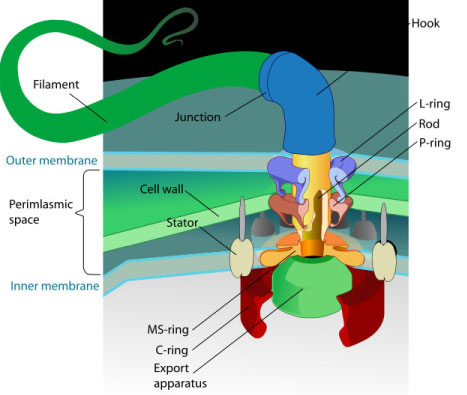
Early evolutionists, such as J.B.S. Haldane, thought that there could never be wheels in living organisms, because natural selection could never produce it.22 Yet modern biology has discovered tiny rotary engines which contain wheels, so fulfil Haldane’s falsification criterion.
The rotary motor of the bacterial flagellum is rightly regarded as an example of exquisite design (see The amazing motorized germ). Other motors in living organisms include ATP synthase, which makes the vital energy currency of the cell—ATP, and a powerful motor in a simple virus that’s essential for winding up its DNA.
However, SEC tries to dismiss this example of design:
Biologists have examined each of the molecular systems claimed to be the products of design and have shown how they could have arisen through natural processes.
However, one of the leading experts in the flagellum, Scott Minnich, disagrees with this, and points out that those who make the claim have no experience analyzing the flagellum.
For example, in the case of the bacterial flagellum, there is no single, uniform structure that is found in all flagellar bacteria. There are many types of flagella, some simpler than others, and many species of bacteria do not have flagella to aid in their movement.
This is like saying that propellers on airplanes can’t be designed, because there are many types of propeller, and some airplanes don’t use a propeller for propulsion.
Thus, other components of bacterial cell membranes are likely the precursors of the proteins found in various flagella. In addition, some bacteria inject toxins into other cells through proteins that are secreted from the bacterium and that are very similar in their molecular structure to the proteins in parts of flagella.
This similarity indicates a common evolutionary origin, where small changes in the structure and organization of secretory proteins could serve as the basis for flagellar proteins. Thus, flagellar proteins are not irreducibly complex.
SEC is misleading its readers. Minnich showed that in reality, the type-III secretory apparatus (TTSS) must have devolved from the flagellum (a more complex structure), if one did arise from the other. Note also, it is not a fallacious argument to appeal to a genuine authority, as Minnich is, on the flagellum.
Moreover, SEC is out of step even with evolutionary experts on the TTSS, who are agreed that the flagellum preceded the TTSS:
‘It seems plausible that the original type III secretion system for virulence factors evolved from those for flagellar assembly.’23
‘We suggest that the flagellar apparatus was the evolutionary precursor of Type III protein secretion systems.’24
It’s actually quite logical under their own belief system. Evolution teaches that bacteria evolved before plants and animals. But they always had to swim, so it makes sense that the swimming machinery preceded the secretion machinery that would be needed only once multicellular life evolved.
SEC has little excuse for proposing an explanation that defies even the best evolutionary theories, without informing readers.
Eye
Again, the eye is an exquisite example of design, as we have shown in articles such as:
- Eye evolution, a case study
- Superb sense organ sheds light on alleged eye imperfection
- Excellent Eye: Better than any camera the eye’s response to light
- Fibre optics in eye demolish atheistic bad design argument

But SEC tries to defend the evolutionary case of gradual evolution of the complex eye from simpler ones.
Eyes in living mollusks.The octopus eye is quite complex, with components similar to those of the human eye, such as a cornea, iris, refractive lens, and retina. Other mollusks have simpler eyes. The simplest eye is found in limpets (top), consisting of only a few pigmented cells, slightly modified from typical epithelial (skin) cells. Slit-shell mollusks (second from top) have a slightly more advanced organ, consisting of some pigmented cells shaped as a cup. Further elaborations and increasing complexity are found in the eyes of Nautilus and Murex, which are not as complex as the eyes of the squid and octopus.
There is no doubt that nature contains gradations in complexity. This is quite different from proving that this gradation is caused by evolution from simple to complex. It is possible to arrange different automobiles in order of complexity as well, but this doesn’t prove that the Model T, for example, evolved into the more complex cars. Rather, all the cars were designed. Strangely enough, one Tim Berra, in his book Evolution and the Myth of Creation, missed this obvious point when he used four different designs of the Corvette in different years as an analogy to evolution—leading ID proponent Philip Johnson calls this fallacy ‘Berra’s Blunder’.
But the main problem with eye evolution is not the large-scale structure but the coordination of the parts, as well as the incredibly complex biochemistry involved in even the most rudimentary vision, as shown in the above articles.
Practical application of evolution?
Much has been made of certain processes that allegedly mimic evolution to produce improved enzymes or structures. However, these processes are really a form of iterative algorithm, something that goes back at least as far as the creationist Isaac Newton! He used such a process to solve certain mathematical equations by making an estimate, performing a mathematical operation on that to produce a better estimate, then repeating (iterating) the process on the new estimate to produce an even better estimate, and so on.
The new evolutionary fad is ‘genetic algorithms’, and SEC provides the following example:
Evolution in Industry: Putting Natural Selection to WorkThe concept of natural selection has been applied in many fields outside biology. For example, chemists have applied principles of natural selection to develop new molecules with specific functions. First they create variants of an existing molecule using chemical techniques. They then test the variants for the desired function. The variants that do the best job are used to generate new variants. Repeated rounds of this selection process result in molecules that have a greatly enhanced ability to perform a given task.
This technique has been used to create new enzymes that can convert cornstalks and other agricultural wastes into ethanol with increased efficiency.
First, we note again that natural selection is NOT evolution. Second, applying the lessons from Genetic algorithms do they show that evolution works?
- It’s one thing to select for a single ability, and quite another to select for the multitude of abilities that even the simplest living organisms have.
- In this case, we have a certain chemical ability already existing (e.g. binding affinity to something), and the changes can increase or decrease this ability more or less continuously. But there are many cell machines and more complex organs that need to be fully formed to work at all. So such gradual processes could not work, since there are discrete hurdles to be jumped.
- Molecules always survived, unlike in real life, and the artificial selection by humans (or their automated machinery) is far stronger than in the biological world.
- The chemical techniques for producing more molecules produce far more ‘offspring’ and at a higher rate even than microbes, let alone more complex creatures.
- The variation rate would correspond to an unacceptably high mutation rate if applied to an organism.
- And we have also pointed out that sometimes enzymes are highly finetuned for one particular substrate—it’s important that an enzyme doesn’t cause the wrong chemical to react. This is important for the precise control required in many cell processes. A loss of information would allow it to operate on more types of molecule. Proteins by their very nature of possessing both polar and non-polar side groups will stick to almost anything but other proteins. So it’s not too hard to imagine how a loss of information will allow them to catalyze more reactions. This may well be desirable for an enzyme that can convert many types of waste into ethanol. But this is in the wrong direction to produce the cell machinery necessary for life.
Evolution v biology
As shown above, the NAS agitprop has woefully failed to provide evidence of goo-to-you evolution, let alone shown that it’s essential for biology. Dr Marc Kirschner, founding chair of the Department of Systems Biology at Harvard Medical School states:
‘In fact, over the last 100 years, almost all of biology has proceeded independent of evolution, except evolutionary biology itself. Molecular biology, biochemistry, physiology, have not taken evolution into account at all.’25
See also Is evolution really essential for biology?
Origin of first life; Chemical evolution
The origin of the first life is a severe problem for materialists. They invoke ideas of chemical evolution, where life supposedly evolved from non-living chemicals. However, the chemistry and probability is against it, as we have shown. Furthermore, natural selection is not an option as an explanation of the first self-replicating entity, because natural selection is differential reproduction, i.e. it presupposes reproduction so can’t explain its origin. Theodosius Dobzhansky (1900–1975), one of the leading evolutionists of the 20th century, pointed out:
In order to have natural selection, you have to have self-reproduction or self-replication and at least two distinct self-replicating units or entities [therefore] Prebiological natural selection is a contradiction of terms.26
So the origin of life is a big problem for materialists: if evolution by natural selection could not have started in the first place, it’s dead in the water. It’s pointless to talk about selection between two runners if both are dead on the starting line!
The famous philosopher Antony Flew, until recently known as a leading proponent of atheism, abandoned this belief by considering the design of a cell. He explains:
‘It seems to me that Richard Dawkins constantly overlooks the fact that Darwin himself, in the fourteenth chapter of The Origin of Species, pointed out that his whole argument began with a being which already possessed reproductive powers. This is the creature the evolution of which a truly comprehensive theory of evolution must give some account.
‘Darwin himself was well aware that he had not produced such an account. It now seems to me that the findings of more than fifty years of DNA research have provided materials for a new and enormously powerful argument to design.’27
In a handwaving way, SEC glosses over the problems.
Evidence from the most ancient fossils reveals that life has existed on Earth for most of our planet’s history. Paleontologists working in Western Australia have discovered layered rocks known as stromatolites that appear to have resulted from the actions of bacteria at least 3.4 billion years ago, and fossils of cyanobacteria (also known as blue-green algae) have been determined to be nearly 3.5 billion years old. Other chemical evidence suggests that life may have originated much earlier, within a few hundred million years of when Earth’s surface finally cooled.
This is true, and a problem for chemical evolutionists that have some of them scrambling for wacky ideas like panspermia. Dr Martin Line, a microbiologist in Tasmania, in an overview28 admits that ‘there remain numerous unsolved “chicken and egg” problems’. But his major problem is the timing. That is, there is far too short a time interval, even according to evolutionary ‘dates’, between the earth becoming habitable and being inhabited. Earth was allegedly fit for life about 3.8. billion years ago, but ‘all basic types of bioenergetic processes probably existed 3·5 billion years ago and the biogeochemical cycling of carbon, nitrogen and sulfur was established as we know it today …’.29
‘Hence the enigma: an origin of life on Earth appears highly improbable, an origin elsewhere is highly conjectural. While this conundrum has been identified in various forms for several decades, its magnitude has dramatically increased over the last five years as new constraints are placed on the timing of the primary divergence of the domains of life. …
‘If Earth was the cradle for life, the time interval between its origin and the existence of the LCC [Last Common Community] appears incomprehensibly short. In view of the apparent complexity of the LCC, particularly in terms of biochemistry, it would be reasonable to allow perhaps 4 gigayears for its evolution from the primordial cell.’
Thus he concludes:
‘Acceptance of such an extended period of evolution must however lead to the conclusion of an extra-terrestrial origin for life on Earth. … The concept of interstellar panspermia30 has been a philosophical luxury; it may soon become a necessity if constraints of evolutionary theory continue to conspire against an origin of life in our solar system.’
Problems with panspermia
- It merely pushes the problem back a step. I.e. instead of choosing between creation and evolution for life on earth, this choice must be made for hypothetical alien life.
- SEC claims that creation is unscientific because it postulates a Creator who can’t be tested in the lab. But exactly the same objection can be raised to aliens!
Figuring out how life began is both an exciting and a challenging scientific problem. No fossil evidence of life forms older than 3.5 billion years has yet been found.
However, a 2004 paper argues from uranium geochemistry that there were oxidizing conditions, thus photosynthesis, at 3.7 evolutionary billion years ago.31 But according to evolutionary dating, the earth was being bombarded by meteorites up to 3.8 billion years ago. So even granting evolutionary presuppositions, this latest research shows that life existed almost as soon as the earth was able to support it, not ‘billions and billions of years’ later.
But if there were no oxygen (O2 ), then there would be no ozone (O3 ), which shields Earth from short-wave radiation, so ultraviolet light would destroy any biochemicals. This is a real ‘catch-22’. Another one is that the hydrogen cyanide (HCN) polymerization that is alleged to lead to adenine (an essential DNA/RNA base) can occur only in the presence of oxygen.32
Re-creating conditions that led to those earliest organisms is difficult because much remains unknown about the chemical and physical characteristics of the early Earth. Nevertheless, researchers have been developing hypotheses of how self-replicating organisms could form and begin to evolve, and they have tested the plausibility of these hypotheses in laboratories.While none of these hypotheses has yet achieved consensus, some progress has been made on these fundamental questions. Since the 1950s hundreds of laboratory experiments have shown that Earth’s simplest chemical compounds, including water and volcanic gases, could have reacted to form many of the molecular building blocks of life, including the molecules that make up proteins, DNA, and cell membranes.
This refers to the Miller–Urey experiments, after graduate student Stanley Miller (1930–2007) and his supervisor Harold Urey (1893–1981), who had won the 1934 Nobel Prize for Chemistry for discovering deuterium (heavy hydrogen).33 These experiments used gases that most evolutionists now agree were not part of Earth’s early atmosphere. For example, as above, there was likely free oxygen, which the Miller–Urey experiments rigorously excluded. See also Why the Miller Urey research argues against abiogenesis.
Meteorites from outer space also contain some of these chemical building blocks, and astronomers using radio telescopes have found many of these molecules in interstellar space.
However, these alleged building blocks never build anything, and some of them would be too unstable to even last long enough for further chemical evolution, as we have shown in:
For life to begin, three conditions had to be met. First, groups of molecules that could reproduce themselves had to come together. Second, copies of these molecular assemblages had to exhibit variation, so that some were better able to take advantage of resources and withstand challenges in the environment. Third, the variations had to be heritable, so that some variants would increase in number under favorable environmental conditions.
That’s a big problem. The article Self-replicating enzymes? addresses some of the popular candidates.
No one yet knows which combination of molecules first met these conditions
Note here, SEC assumes that chemical evolution is a fact, although they have no clue how it could have happened. The non-creationist information theorist Hubert Yockey made a very revealing comment 30 years ago:
‘Research on the origin of life seems to be unique in that the conclusion has already been authoritatively accepted … . What remains to be done is to find the scenarios which describe the detailed mechanisms and processes by which this happened.’34
This is important to keep in mind when reading popular accounts of evolution, or in response to those who claim that believers in design are ‘biased’.
but researchers have shown how this process might have worked by studying a molecule known as RNA. Researchers recently discovered that some RNA molecules can greatly increase the rate of specific chemical reactions, including the replication of parts of other RNA molecules. If a molecule like RNA could reproduce itself (perhaps with the assistance of other molecules), it could form the basis for a very simple living organism.
RNA is actually a very advanced molecule, and nowhere near being found in Miller–Urey experiments or in outer space. The chemical hurdles are enormous, as admitted by evolutionist chemist Graham Cairns-Smith (see also The RNA World: A Critique).
If such self-replicators were packaged within chemical vesicles or membranes, they might have formed “protocells”—early versions of very simple cells. Changes in these molecules could lead to variants that, for example, replicated more efficiently in a particular environment. In this way, natural selection would begin to operate, creating opportunities for protocells that had advantageous molecular innovations to increase in complexity.
Constructing a plausible hypothesis of life’s origins will require that many questions be answered. Scientists who study the origin of life do not yet know which sets of chemicals could have begun replicating themselves.
Indeed so. Dr Yockey finished his paper with:
‘One must conclude that, contrary to the established and current wisdom a scenario describing the genesis of life on earth by chance and natural causes which can be accepted on the basis of fact and not faith has not yet been written.’
The Origin-of-Life Foundation, Inc. currently offers a $1 million prize to anyone providing a chemically plausible naturalistic solution for the genetic code and origin of life. The website states:
‘“The Origin-of-Life Prize” ® (hereafter called “the Prize”) will be awarded for proposing a highly plausible mechanism for the spontaneous rise of genetic instructions in nature sufficient to give rise to life. To win, the explanation must be consistent with empirical biochemical, kinetic, and thermodynamic concepts as further delineated herein, and be published in a well-respected, peer-reviewed science journal(s).’35
Thus far, there have been no awards.36

Even if a living cell could be made in the laboratory from simpler chemicals, it would not prove that nature followed the same pathway billions of years ago on the early Earth.
Certainly. See the cartoon (right).
But the principles underlying life’s chemical origins, as well as plausible chemical details of the process, are subject to scientific investigation in the same ways that all other natural phenomena are. The history of science shows that even very difficult questions such as how life originated may become amenable to solution as a result of advances in theory, the development of new instrumentation, and the discovery of new facts.
More likely, we will discover even more intricate machinery required for even ‘simple’ cells to function. After all, Darwin thought that the cell was just a blob, but the amount of machinery in even the simplest living organisms is staggering. Even enzymes are remarkable, as one of Stanley Miller’s closest colleagues Leslie Orgel (1927–2007) pointed out in a posthumously published paper:
‘The catalytic properties of enzymes are remarkable. They not only accelerate reaction rates by many orders of magnitude, but they also discriminate between potential substrates that differ very slightly in structure. Would one expect similar discrimination in the catalytic potential of peptides of length ten or less? The answer is clearly “no”, and it is this conclusion that ultimately undermines the peptide cycle theory.’37
Indeed, one enzyme can accelerate a vital reaction in cells by 1018 times, and another accelerates by an astounding factor of 1021 (see World record enzymes). The lead researcher Dr Richard Wolfenden, of the University of North Carolina made this curious comment:
‘Without catalysts, there would be no life at all, from microbes to humans. It makes you wonder how natural selection operated in such a way as to produce a protein that got off the ground as a primitive catalyst for such an extraordinarily slow reaction.’38
But as shown above, there could be no natural selection without life, and life needs enzymes …
Cosmic evolution?
SEC makes it clear that evolution is a whole materialistic worldview. They include the origin of the universe in this:
The picture of Earth’s place in the cosmos changed as much in the 20th century as it did in the 16th and 17th centuries following Copernicus’s then controversial suggestion that the Sun, not the Earth, was at the center of the known universe.
It’s notable that Copernicus, as well as Galileo, Kepler and Newton, were all young earth creationists. They never saw their discoveries as a threat to their biblical worldview. But they were a threat to the secular Aristotelian science consensus of their day, which is why the Aristotelians were Galileo’s staunchest foes. See The Galileo affair: history or heroic hagiography? And RE ch. 7.
In the 1920s a new telescope at the Mount Wilson Observatory outside Los Angeles revealed that many of the faint smudges of light scattered across the night sky are not nebulae within our own Milky Way galaxy. Rather, they are separate galaxies, each containing many billions of stars. By studying the light emitted by these stars, astrophysicists arrived at another remarkable conclusion: The galaxies are receding from each other in every direction, which implies that the universe is expanding.
Seeing all the galaxies receding from us is just what we would expect if our galaxy were at or near the centre of the universe, as recent creationist cosmologies imply.39 But the materialists make a philosophical decision to declare that there is no centre, so an observer on any galaxy would see others receding. E.g. the famous discoverer of galactic recession, Edwin Hubble said in The Observational Approach to Cosmology (1937):
‘Such a condition [these Doppler shifts] would imply that we occupy a unique position in the universe, … But the unwelcome supposition of a favored location must be avoided at all costs … is intolerable … moreover, it represents a discrepancy with the theory because the theory postulates homogeneity.’
Astronomer George Ellis, in an interview in Scientific American 273(4):28, 29, was quoted as follows:
‘“People need to be aware that there is a range of models that could explain the observations,” Ellis argues. “For instance, I can construct you a spherically symmetrical universe with Earth at its center, and you cannot disprove it based on observations.” Ellis has published a paper on this. “You can only exclude it on philosophical grounds. In my view there is absolutely nothing wrong in that. What I want to bring into the open is the fact that we are using philosophical criteria in choosing our models. A lot of cosmology tries to hide that.”’
But while recession in itself is consistent with both a no-centre and a centred model, there are certain data that make sense only with a centred model. One is the decades-long redshift analysis by William Tifft at the Steward Observatory in Tucson, Arizona. He found that the shifts are quantized, or in discrete groups. Since redshift is proportional to distance, this indicates that the galaxies form concentric shells around ours. If the observers of these redshifts (us) were not near the centre, the redshifts would be continuous.
Another is the Sloan Digital Sky Survey, that shows that there are even larger-scale concentric groupings of galaxies.
Much of this was covered in Refuting Compromise, but the most recent and more specialized discussion is in CMI’s new book Starlight, Time and the New Physics by physicist and published cosmologist Dr John Hartnett.
This observation led to the hypothesis first proposed by the Belgian astronomer and Roman Catholic priest Georges Lemaître that the universe originated in an event known as the ‘Big Bang’.
SEC shortchanges its readers by hiding the tremendous dissent even from secular astronomers who oppose the big bang. 33 leading scientists published ‘Open Letter to the Scientific Community’ on the Internet (Cosmology statement) and in New Scientist 182(2448)20, 22 May 2004). This states:
- ‘The big bang today relies on a growing number of hypothetical entities, things that we have never observed—inflation, dark matter and dark energy are the most prominent examples. Without them, there would be a fatal contradiction between the observations made by astronomers and the predictions of the big bang theory.’
- ‘But the big bang theory can’t survive without these fudge factors. Without the hypothetical inflation field, the big bang does not predict the smooth, isotropic cosmic background radiation that is observed, because there would be no way for parts of the universe that are now more than a few degrees away in the sky to come to the same temperature and thus emit the same amount of microwave radiation. … Inflation requires a density 20 times larger than that implied by big bang nucleosynthesis, the theory’s explanation of the origin of the light elements.’ [This refers to the horizon problem, and supports what we say in Light-travel time: a problem for the big bang.]
- ‘In no other field of physics would this continual recourse to new hypothetical objects be accepted as a way of bridging the gap between theory and observation. It would, at the least, raise serious questions about the validity of the underlying theory [emphasis in original].’
- ‘What is more, the big bang theory can boast of no quantitative predictions that have subsequently been validated by observation. The successes claimed by the theory’s supporters consist of its ability to retrospectively fit observations with a steadily increasing array of adjustable parameters, just as the old Earth-centred cosmology of Ptolemy needed layer upon layer of epicycles.’
According to this idea, all of the energy and matter in the universe initially were compressed into an infinitesimally small, infinitely dense, and infinitely hot object known as a singularity, about which scientists still know very little.
That’s for sure. They even say that the current laws of physics don’t apply. So should they be objecting to a Designer who is outside the scope of scientific investigation, but promote a singularity that’s also outside the scope of scientific investigation?
The universe then began to expand. As it did, the universe cooled to the point that the elementary particles that today form the matter of the universe became stable. The occurrence of the Big Bang, and the time that has elapsed since then, implied that matter in deep space should be at a particular temperature—a prediction confirmed by ground-based microwave radio telescopes. Later observations with satellites showed that the background radiation in the universe has exactly the properties that would be predicted from the Big Bang.
This is historical revisionism. This nice story is undermined by the fact that in the 1950s, George Gamow and his students made a number of estimates of the background temperature ranging from 3 to 50 K. More importantly, Andrew McKellar’s analysis of the rotational spectra before Gamow had previously found a 2.3 K background temperature, so it was not a true ‘prediction’ of the big bang.
Also, Dr Richard Lieu’s team of University of Alabama Huntsville scientists, found that the background radiation did not cast the shadows expected if it were really from the big bang. He said, ‘Either it (the microwave background) isn’t coming from behind the clusters, which means the Big Bang is blown away, or … there is something else going on.’
See discussion of both above points in Nobel Prize for alleged big bang proof.
As the universe expanded, the matter in it gathered, by way of gravity and other processes that are not yet fully understood, into immense structures that became galaxies.
This is an understatement. Stephen Hawking, in A Brief Illustrated History of Time (1996 update to his famous book A Brief Illustrated History of Time), said:
‘This [big bang] picture of the universe that started off very hot and cooled as it expanded is in agreement with all the observational evidence we have today. Nevertheless it leaves a number of important questions unanswered … (2) Why is the universe so uniform on a large scale? Why does it look the same at all points of space and in all directions?’ …
‘(4) Despite the fact that the universe is so uniform and homogeneous on a large scale, it contains local irregularities, such as stars and galaxies. These are thought to have developed from small differences in the density of the early universe from one region to another. What was the origin of these density fluctuations?’
Indeed, the big bang also doesn’t explain how galaxies and even highly structured groups of galaxies have been observed too early under the big bang’s own cosmology. One of the large-scale structures is the Francis Filament, after team member Dr Paul Francis from the Australian National University. He explained the problem in a NASA report:
‘The team compared their observations to supercomputer simulations of the early Universe, which could not reproduce strings this large. “The simulations tell us that you cannot take the matter in the early Universe and line it up in strings this large,”’ Dr Francis said.
‘“There simply hasn’t been enough time since the Big Bang for it to form structures this colossal.’’ …
‘“To explain our results the dark matter clouds that lie in strings must have formed galaxies, while the dark matter clouds elsewhere have not done so. We’ve no idea why this happened—it’s not what the models predict,” Dr Francis said.
Within these structures, much smaller clumps of matter collapsed into whirling clouds of gas and dust. When the matter in the center of an individual cloud became sufficiently compressed by gravity, the hydrogen atoms in that cloud began to fuse into helium atoms, giving off visible light and other radiation—the origin of a star.
Once again, the supposed original dust clouds would be too hot to be compressed under their own gravity, unless the cloud was as massive as a globular cluster (i.e. about 100,000 stars). And there would be no real ‘dust’ since the big bang is not supposed to have made elements heavier than helium; these are supposed to have been made in star cores, especially via supernovas. This is also important, because many models of star formation rely on radiating heat via molecules formed on dust grains.
Also, there have been no stars observed without the heavy elements, the hypothetic ‘Population III’ stars that were supposed to be the first stars formed after the big bang.
Indeed, a big-bang–supporting article In the Beginning by Dennis Overbye in the anti-Christian and Communist-whitewashing New York Times reported (23 July 2002):
‘“It’s a huge mystery exactly how stars form,” Dr Richard Bond of the Canadian Institute for Theoretical Astrophysics.’
This confirms what we have said—see Are stars forming today? And Stars could not have come from the big bang. See also Refuting Compromise, ch. 5.
Astrophysicists also have found that some stars form in the middle of a flattened spinning disk of matter. The gas and dust within such disks can aggregate into small grains, and these grains can form larger bodies called planetesimals.
Actually, according to a leading planet researcher, aggregation is a real problem. According to Thomas Clark at the University of Central Florida in Orlando:
‘While asteroid-sized rocks would have aggregated in the inner solar system, they would not have melted and clumped together to form planets. … the solid rocks would just zoom past each other or collide and recoil like snooker balls.’40
This is especially a problem, since the sun was supposedly much cooler billions of years ago. But Clarke said something astonishing:
‘It’s a bit depressing to think that Earth-like planets are too special.’40
Here we see philosophical prejudice once again, not science.
Computer simulations have indicated that planetesimals can coalesce into planets and other objects (such as moons and asteroids) orbiting a star. Our own solar system is likely to have formed in this way, and careful measurements have detected large planets orbiting stars in other parts of the Milky Way. These findings imply that billions of planets are orbiting the many billions of stars in our galaxy.
Actually, the computer simulations are a real problem for evolutionary theories of origin of planets. For instance, they fail to explain why the huge ‘ice giants’ Uranus and Neptune could form so far from the sun where there is little material available. Astronomer Robert Naeye admitted:
‘Pssst … astronomers who model the formation of the solar system have kept a dirty little secret: Uranus and Neptune don’t exist. Or at least computer simulations have never explained how planets as big as the two gas giants could form so far from the sun. Bodies orbited so slowly in the outer parts of the solar system that the slow process of gravitational accretion would need more time than the age of the solar system to form bodies with 14.5 and 17.1 times the mass of Earth.’41
See also:
How old is the Earth?
SEC doesn’t really say very much except for a very elementary description of radiometric dating:
Some who oppose the teaching of evolution try to cast doubt on radiometric age measurements. Radiometric dating is the product of more than a century of ingenious research and represents one of the most well-substantiated achievements of modern science.
This is debatable, to say the least. It must ignore the 14C found in coal and diamonds, although it decays so quickly that it should all be gone in less than a million years. See Diamonds: a creationist’s best friend: Radiocarbon in diamonds: enemy of billions of years.
For more detail on the problems with such dating, see A Christian response to radiometric dating by Dr Tas Walker, an engineer and geologist with considerable experience working with radiometric dating methods.
Self-serving SEC definitions of ‘science’
SEC has some muddled ideas about the philosophy of science. SEC claims:
Science and religion are based on different aspects of human experience. In science, explanations must be based on evidence drawn from examining the natural world.
Even if the evidence is drawn from the natural world, it doesn’t follow that the explanations for the evidence are confined to this world. Indeed, Newton’s law of gravity was criticized for postulating an ‘occult’ action-at-a-distance force, and his predecessor Galileo likewise published his observations about motions while refusing to speculate about underlying causes. The philosopher Larry Laudan, a staunch anti-creationist, nevertheless criticized Judge Overton’s ruling in the 1981/2 Arkansas ‘McLean’ creation science trial in his critique Science at the Bar Causes for Concern:42
‘For centuries scientists have recognized a difference between establishing the existence of a phenomenon and explaining that phenomenon in a law-like way. Our ultimate goal, no doubt, is to do both. But to suggest, as the McLean Opinion does repeatedly, that an existence claim (e.g., there was a worldwide flood) is unscientific until we have found the laws on which the alleged phenomenon depends is simply outrageous.
‘Galileo and Newton took themselves to have established the existence of gravitational phenomena, long before anyone was able to give a causal or explanatory account of gravitation. Darwin took himself to have established the existence of natural selection almost a half-century before geneticists were able to lay out the laws of heredity on which natural selection depended.
‘If we took the McLean Opinion criterion seriously, we should have to say that Newton and Darwin were unscientific; and, to take an example from our own time, it would follow that plate tectonics is unscientific because we have not yet identified the laws of physics and chemistry which account for the dynamics of crustal motion.’
Scientifically based observations or experiments that conflict with an explanation eventually must lead to modification or even abandonment of that explanation.
Laudan summarized what many philosophers of scientists have recognized: that there are many examples of undoubted science that are held just as dogmatically as the creationists they criticized:
‘But historical and sociological researches on science strongly suggest that the scientists of any epoch likewise regard some of their beliefs as so fundamental as not to be open to repudiation or negotiation. Would Newton, for instance, have been tentative about the claim that there were forces in the world? Are quantum mechanicians willing to contemplate giving up the uncertainty relation? Are physicists willing to specify circumstances under which they would give up energy conservation?
‘Numerous historians and philosophers of science (e.g., Kuhn, Mitroff, Feyerabend, and Lakatos) have documented the existence of a certain degree of dogmatism about core commitments in scientific research and have argued that such dogmatism plays a constructive role in promoting the aims of science. I am not denying that there may be subtle but important differences between the dogmatism of scientists and that exhibited by many creationists; but one does not even begin to get at those differences by pretending that science is characterized by an uncompromising open-mindedness.’
We have also documented how Lakatos showed how a core theory could be protected from criticism because it was ‘protected’ by auxiliary hypotheses. Any conflicts can be blamed on these expendable hypotheses while the core remains intact.
And in his previous paragraph, Laudan showed that some creationists are not as dogmatic as claimed, certainly when it comes to auxiliary hypotheses and models.
‘Judge Overton’s third worry about Creationism centers on the issue of revisability. Over and over again, he finds Creationism and its advocates ‘unscientific’ because they have ‘refuse[d] to change it regardless of the evidence developed during the course of their investigation.’ In point of fact, the charge is mistaken. If the claims of modern-day creationists are compared with those of their nineteenth-century counterparts, significant shifts in orientation and assertion are evident. One of the most visible opponents of Creationism, Stephen Gould, concedes that creationists have modified their views about the amount of variability allowed at the level of species change. Creationists do, in short, change their minds from time to time. Doubtless they would credit these shifts to their efforts to adjust their views to newly emerging evidence, in what they imagine to be a scientifically respectable way.’
Indeed, the most popular ‘real’ article on the CMI site is Arguments we think creationists should NOT use.
Laudan concluded his critique with the following, and it is relevant 25 years later because the NAS is persisting with the same superficial philosophy of science.
‘The victory in the Arkansas case was hollow, for it was achieved only at the expense of perpetuating and canonizing a false stereotype of what science is and how it works. If it goes unchallenged by the scientific community, it will raise grave doubts about that community’s intellectual integrity. No one familiar with the issues can really believe that anything important was settled through anachronistic efforts to revive a variety of discredited criteria for distinguishing between the scientific and the non-scientific.’
Sometimes the NAS committee is so keen to attack creation or ID with pseudo-philosophical word games that they can’t even think straight. E.g. SEC makes this blunder in two sentences:
However, the claims of intelligent design creationists are disproven by the findings of modern biology. … Intelligent design is not a scientific concept because it cannot be empirically tested.
But if the claims of ID are ‘disproven’ by certain findings, then they must have been empirically ‘tested’ and failed this test, which is impossible if they ‘cannot be empirically tested’! But since these sentences are two pages apart, their attention span may have been too small to notice this blatant contradiction.
2. Is evolution compatible with religion?
First, I would say ‘yes’. The government schools have not removed ‘religion’ but have replaced the Christian religion with atheism (the 7th Circuit Court of Appeals ruled, ‘Atheism is [a Wisconsin prison inmate’s] religion’).
But SEC is not about to admit that. One of its main purposes is to anesthetize church leaders to the conflict, while their flock’s confidence in the Bible is undermined. But when an opponent insists that there is agreement, it is important to look at the terms and track record.
E.g. Neville Chamberlain famously believed that his Munich 1938 meeting with Hitler would bring ‘peace in our time’. But as Winston Churchill had long been saying, the agreement terms were all about appeasing Hitler and gaining nothing in return. And Hitler’s track record showed that he was prepared to violate other treaties if it suited him. Now we know that Munich fatally strengthened Hitler and made WW2 inevitable, and Churchill lamented that no war in history had been as easy to prevent, by standing firm with the threat of superior force when Hitler was still weak (cf. Jesus’ point that the threat of superior force can induce peacemaking early on, Luke 14:31–32).
Terms
The terms of the NAS’s view of non-overlapping magisteria (NOMA) are not good. They have demanded total surrender by ‘religion’ to ‘science’ of anything connected to the real world, while ‘religion’ must make do with ever-decreasing crumbs of ‘values’. Thus theistic evolution and atheistic evolution differ in no practical way; or as John Woodmorappe says, ‘an “incognito creator” is essentially no different from a nonexistent creator,’ or as Dr Duane Gish pointed out, there may be theistic evolutionists, but theistic evolution itself is an oxymoron, just like an anhydrous reaction using water. A good illustration is Woodmorappe’s parable The horse and the tractor: Why God and evolution don’t mix.
SEC manages to further misrepresent Christianity:
Religious faith, in contrast [with science], does not depend only on empirical evidence, is not necessarily modified in the face of conflicting evidence, and typically involves supernatural forces or entities.
I.e. religion has nothing to do with the real world. However the Christian faith did depend on the empirical evidence that Jesus’ tomb was empty on the third day, and that He had appeared to over 500 at once according to reliable eyewitness testimony. There was even a falsification criterion: if the Roman or Jewish enemies had produced Jesus’ body, with the clearly distinctive features of crucifixion without any bones broken, they would have quashed this new faith. But despite having every motive, they could never produce this evidence. Previously, Jesus had provided other empirical evidence that He was the Messiah via the three specific miracles that had never been performed since Moses handed down the Law, and which the Rabbis had said only the Messiah would be able to do. These Messianic miracles were the healing of a Jewish leper (Luke 5, 17), casting out a demon that caused dumbness (Matthew 12) and healing a man born blind (John 9).
Because they are not a part of nature, supernatural entities cannot be investigated by science.
But their effects might be, e.g. the design in creation, as well as the empty tomb. See also RE ch. 9.
In this sense, science and religion are separate and address aspects of human understanding in different ways. Attempts to pit science and religion against each other create controversy where none needs to exist.
See the analysis of NOMA, as well as the problems with trying to mix Christianity and evolution, in RE2
On the contrary, an important component of religious belief is faith, which implies acceptance of a truth regardless of the presence of empirical evidence for or against that truth.
This is a distorted view of ‘faith’. The biblical definition is belief and loyalty based on persuasion by evidence—see Fallacious Faith: Correcting an All-too-Common Misconception. See also Loving God with all your mind: logic and creation.
Theologians have pointed out that as scientific knowledge about phenomena that had been previously attributed to supernatural causes increases, a ‘god of the gaps’ approach can undermine faith.
Neither creationists nor ID supporters advocate a ‘God of the Gaps’ approach. The fallacy of this objection is that it presumes that the design argument is an appeal to ignorance. The inference of design is based on an analogy of what we do know scientifically, not what we don’t. Leading ID theorist Dr Bill Dembski explains:
‘Certain biological systems have a feature, call it IC (irreducible complexity). Darwinians don’t have a clue how biological systems with that feature originated. … We know that intelligent agency has the causal power to produce systems that exhibit IC (e.g., many human artifacts exhibit IC). Therefore, biological systems that exhibit IC are likely to be designed. Design theorists, in attributing design to systems that exhibit IC, are simply doing what scientists do generally, which is to attempt to formulate a causally adequate explanation of the phenomenon in question.’43
Also, if we do not know, why are evolutionists so dogmatic that they do know that evolution is responsible for the origin and development of life? And they are very keen on natural-selection-of-the-gaps–type arguments.44
We also note again the confusion between operational/observational science v origins/inferential science. For example, one would explain the workings of a computer’s hard drive by the ferrimagnetism of its surface and Maxwell’s electromagnetic equations, and not resort to an intelligence driving these workings. But this doesn’t mean that the programs and data, and the computer’s origin, should not be explained by intelligence.
Track record
Also, the track record of NAS is overt hostility to religion. Larson and Witham, who have written extensively on the creation-evolution controversy, surveyed all 517 NAS members in biological and physical sciences on their belief in a personal God, and published their results in Nature.45 Just over half responded: 72.2% were overtly atheistic, 20.8% agnostic, and only 7.0% believed in a personal God. Belief in God and immortality was lowest among biologists. It is likely that those who didn’t respond were unbelievers as well, so the study probably underestimates the level of anti-God belief in the NAS. The percentage of unbelief is far higher than the percentage among U.S. scientists in general, or in the whole U.S. population.
Commenting on the professed religious neutrality of their teachers’ guidebook Teaching about Evolution, the surveyors comment:
‘NAS President Bruce Alberts said: “There are very many outstanding members of this academy who are very religious people, people who believe in evolution, many of them biologists.” Our research suggests otherwise.’
See also RE ch. 1. It’s notable that antitheists commonly use evolution as a weapon with which to bash theism. So should church leaders take seriously a bunch of known misotheists when they claim there is no conflict? Hitler told Chamberlain he wanted peace. Furthermore, under their own atheistic belief system, there can be no objective moral basis against lying if it suits their cause. Note that our argument is not that atheists cannot live ‘good’ lives, but that there is no objective basis for their goodness if we are just rearranged pond scum—see further explanation in Bomb-building vs. the biblical foundation.

Case study 1: Committee member, Neil deGrasse Tyson
SEC proclaims:
Newspaper and television stories sometimes make it seem as though evolution and religion are incompatible, but that is not true.
However, the astronomer Neil deGrasse Tyson, listed as one of the committee members who produced the revision of SEC, has made it clear he believes the exact opposite, in an article Holy Wars, Natural History, Oct 1999:
‘Let there be no doubt that as they are currently practiced, there is no common ground between science and religion. As was thoroughly documented in the nineteenth century tome, A History of the Warfare of Science with Theology in Christendom, by the historian and one time president of Cornell university Andrew D. White, history reveals a long and combative relationship between religion and science, depending on who was in control of society at the time. The claims of science rely on experimental verification, while the claims of religions rely on faith. These approaches are irreconcilable approaches to knowing, which ensures an eternity of debate wherever and whenever the two camps meet.’
This is just the opposite of what the SEC claims! Tyson also shows his true colours and lack of historical understanding by relying on that discredited 19th-century polemic by White. Along with John William Draper’s 1874 book History of the Conflict between Religion and Science, this has fueled anti-Christian bigotry ever since. However, even the late atheist and Marxist Stephen Jay Gould (who, having died, actually now knows there is a God) wrote of these books:
‘Both tell a tale of bright progress continually sparked by science. And both develop and utilize the same myths to support their narrative, the flat-earth legend prominently among them.’
Gould’s article was ‘The late birth of a flat earth’, a favorable review of the book Inventing the Flat Earth: Columbus & Modern Historians by historian Prof. Jeffrey Burton Russell. This book demolished the slander that flat-earth belief was widespread in the ancient and medieval church (see author’s summary), a slander that Gould largely blames on the book Tyson adulates.
Modern historians of science have affirmed that far from being a matter of ‘warfare’, Christianity provided the essential support! See for example the books by Rodney Stark For The Glory of God: How Monotheism Led to Reformations, Science, Witch-hunts and the End of Slavery (reviewed in The biblical origins of science) and The Victory of Reason: How Christianity Led to Freedom, Capitalism, and Western Success (2005, reviewed in Christianity as progress). It should not be surprising, because the biblical framework is the only one that provides the foundation for science—an orderly universe, the right to investigate it, voluntary thought, logic and morality, as I explained in this feedback response.
But Tyson continues:
‘Just as in hostage negotiations, it’s probably best to keep both sides talking to each other.’
This is good evidence of what the NAS is trying to do—the goal of such negotiations is to induce the kidnapper to surrender!
Tyson has also mocked the idea of any sort of designer, but merely showed his ignorance by citing the allegedly useless appendix, despite its long-known role in the immune system especially in the neonatal state, and its recently discovered role as a safe house for good bacteria, as well as the fact that man’s alleged primate ancestors show no evidence of a more developed structure of which the appendix could be a vestige. A recent paper stated:
‘The human vermiform (“worm-like”) appendix is a 5–10 cm long and 0.5–1 cm wide pouch that extends from the cecum of the large bowel. The architecture of the human appendix is unique among mammals, and few mammals other than humans have an appendix at all. The function of the human appendix has long been a matter of debate, with the structure often considered to be a vestige of evolutionary development despite evidence to the contrary based on comparative primate anatomy. The appendix is thought to have some immune function based on its association with substantial lymphatic tissue, although the specific nature of that putative function is unknown. Based (a) on a recently acquired understanding of immune-mediated biofilm formation by commensal bacteria in the mammalian gut, (b) on biofilm distribution in the large bowel, (c) the association of lymphoid tissue with the appendix, (d) the potential for biofilms to protect and support colonization by commensal bacteria, and (e) on the architecture of the human bowel, we propose that the human appendix is well suited as a “safe house” for commensal bacteria, providing support for bacterial growth and potentially facilitating re-inoculation of the colon in the event that the contents of the intestinal tract are purged following exposure to a pathogen.’46
In general, Tyson’s arguments also ignore the Fall and the resultant deterioration. This is a huge problem with trying to mix God and evolution.
See related article: Cosmos by Neil deGrasse Tyson—Episode 2: “Some of the things that molecules do”
Case study 2: Recommended author, Philip Kitcher
One of the recommended books is Living with Darwin: Evolution, Design and the future of Faith by Philip Kitcher. But Kitcher is an open secular humanist, and his whole point was to argue that there is no compatibility between evolution and theistic religion, and ‘shows Christianity in retreat.’ However, his open attacks on the Bible rely on fringe sources like the Jesus Seminar, giving credence to the 2nd century forgery The Gospel of Thomas.47
Other ‘proofs’ of ‘no conflict’
Despite Tyson’s and Kitcher’s clear statements that contradict the ‘no conflict’ claims in SEC, the NAS relies on arguments from authority rather than dealing with the many problems with theistic evolution (see the articles under Why is evolution so dangerous for Christians to believe?). But CMI has already addressed two of their poster children in our peer-reviewed Journal of Creation—see Mutilating Miller: A review of Finding Darwin’s God, by Kenneth Miller; and Harmony and discord: A review of The Language of God: A Scientist Presents Evidence for Belief by Francis Collins. Then they invoke the Clergy Letter project, without informing readers that it’s the brainchild of an atheistic biologist Michael Zimmerman.
Unfortunately too many churchians and ostensibly Christian schools and universities crave alleged intellectual respectability more than they respect the Bible and the Gospel. So they were only too eager to join with this outright atheist as well as outright heretics from the Unitarian churches (who officially deny the deity of Christ) as well as the Episcopalian church which is also largely apostate, e.g. former Bishop Spong.
It’s also notable that these atheists only invoke churchians when they basically accept the atheistic account of earth history. So when church leaders support evolutionary ‘science’, we should listen to them; but when they invoke the latest science on the humanity of the unborn to argue against abortion, it’s ‘stick to religion; stay out of science and politics’ (much as pro-slavers said to abolitionists like Wilberforce).
Appendix: Education and legal issues
Mandatory teaching in public schools?
It’s in the interests of SEC to manufacture a bogeyman of creationists and IDers trying to force their beliefs into public schools. And as an American organization, they inform us of various court cases that are less relevant to non-Americans. But for American readers, it is worth covering, including suggesting possible alternatives to lobbying and analyzing the court cases.
Before we go any further, we must iterate that Creation Ministries International has nothing to do with trying to force creation or ID into the public school curriculum, and we advise against such attempts. This has been our consistent position.
Discovery Institute, a leading ID organization, likewise said about mandating the teaching of ID:
‘As a matter of public policy, Discovery Institute opposes any effort require the teaching of intelligent design by school districts or state boards of education. Attempts to mandate teaching about intelligent design only politicize the theory and will hinder fair and open discussion of the merits of the theory among scholars and within the scientific community. Furthermore, most teachers at the present time do not know enough about intelligent design to teach about it accurately and objectively.
‘Instead of mandating intelligent design, Discovery Institute seeks to increase the coverage of evolution in textbooks. It believes that evolution should be fully and completely presented to students, and they should learn more about evolutionary theory, including its unresolved issues. In other words, evolution should be taught as a scientific theory that is open to critical scrutiny, not as a sacred dogma that can’t be questioned. Discovery Institute believes that a curriculum that aims to provide students with an understanding of the strengths and weaknesses of neo-Darwinian and chemical evolutionary theories (rather than teaching an alternative theory, such as intelligent design) represents a common ground approach that all reasonable citizens can agree on.
…
‘Although Discovery Institute does not advocate requiring the teaching of intelligent design in public schools, it does believe there is nothing unconstitutional about voluntarily discussing the scientific theory of design in the classroom. In addition, the Institute opposes efforts to persecute individual teachers who may wish to discuss the scientific debate over design in an objective and pedagogically appropriate manner.’
Separation of school and state
From our perspective, we would not want mandatory creation or ID teaching in public schools, simply because there would be nothing to stop anti-creationist teachers from distorting these positions. This is an official CMI position.
For another, many creationists don’t see why they should send their kids to a public school system anyway, since even on academic grounds it is hardly the best education in many cases, although this is not an official CMI position. This is not surprising, since as Dr Thomas Sowell points out in Smart Problems:
‘Test scores going back more than half a century have repeatedly shown people who are studying to be teachers to be at or near the bottom among college students studying in various fields.’
But even worse than the academic shortcomings, the public school system is not ‘neutral’, because by ignoring God, they are implicitly taking a stand against the biblical teaching that the fear of the Lord is the beginning of wisdom and knowledge (Proverbs 1:7 and 10:9). And rather than removing ‘religion’ from schools, they have really removed Judeo-Christianity and substituted another religion, humanism, as explained in RE ch. 1.
It’s notable that one of the leading economists of all time, Nobel Laureate Milton Friedman (1912–2006), despite being agnostic himself, said:
‘Indeed, we believe that the penalty that is now imposed on parents who do not send their children to public schools violates the spirit of the First Amendment, whatever lawyers and judges may decide about the letter. Public schools teach religion too, not a formal, theistic religion, but a set of values and beliefs that constitute a religion in all but name. The present arrangements abridge the religious freedom of parents who do not accept the religion taught by the public schools yet are forced to pay to have their children indoctrinated with it, and to pay still more to have their children escape indoctrination.’48
Indeed, it has been argued that the religious humanists have planned it brilliantly: convince Christians to send their kids for humanist indoctrination, and also to pay the humanists with their taxes. So it would be like Moses sending the Israelite children to be educated by the Canaanites in their pagan religion, and using Israelite tithes to pay the Canaanites for it! The parallel with the Canaanites, with the grotesque sexual immorality in their temples, is even clearer in California, where the new law SB 777 allows schoolkids to ‘choose their own gender’ when deciding whether to use the boys or girls restroom and locker room. The law may also replace terms like father/mother, husband/wife in textbooks, because they dare to suggest that heterosexuality is the norm, and where California goes, the US, then the western world, tends to follow.
It’s not only some creationists who advocate ‘separation of school and state’ but even some evolutionist libertarians, who argue:
‘[T]he key source of the school wars we and others have experienced has always been compulsion: forcing people to either send their children to or pay for schooling that violates their convictions. When there is no compulsion, conflict is relatively insignificant. Consider other marketplaces, such as the one for religion. Do Protestants picket outside synagogues saying, “No, Jesus wasn’t just some guy, he was God!!!!” Nope. Despite the fact that people often feel very strongly about their religious views, it’s live and let live, because there is no compulsion in the religious marketplace.
‘Liberals, ironically, think that a liberal education system based on parental choice would be socially divisive. They have it exactly backwards: it is the compelled conformity of a single officially-established school system that is socially divisive. Individual freedom in other areas of American life, especially religion, is the reason we have had such a comparatively stable and peaceful society. If we got rid of the one significant remaining area of cultural and ideological compulsion, the official school monopoly, the current red vs. blue animosity would lessen substantially (though of course there are reasons why it wouldn’t go away entirely).’49
Again, CMI is officially apolitical, so has no official position on such ideas. However it seems to me that it is a useful idea to consider, rather than trying to mandate creation/design teaching in schools which CMI opposes.
American legal aspects
Dover, PA and Judge Jones

SEC cites the Dover ruling by Judge John E. Jones III, which many evolutionists delight in, including Richard Dawkins:
District Court for the Middle District of Pennsylvania,
Kitzmiller v. Dover Area School District, 2005
‘[W]e find that ID [intelligent design] is not science and cannot be judged a valid, accepted scientific theory, as it has failed to publish in peer-reviewed journals, engage in research and testing, and gain acceptance in the scientific community. ID, as noted, is grounded in theology, not science. … Moreover, ID’s backers have sought to avoid the scientific scrutiny which we have now determined that it cannot withstand by advocating that the controversy, but not ID itself, should be taught in science class. This tactic is at best disingenuous, and at worst a canard. The goal of the IDM is not to encourage critical thought, but to foment a revolution which would supplant evolutionary theory with ID.’
Even for their own purposes, citing the Dover case is futile. Since it was not appealed to a higher court, it is not a binding legal precedent anywhere outside of the Dover school district.
It is laughable that the NAS should cite as an authority on science a judge who has no scientific or philosophical training. Even philosophers of science who were themselves strongly anticreationist have warned against using a judge as an authority on the philosophy of science.42,50 But this Jones is clearly different; after all, he boasted that he read five newspapers a day! Even the laudatory article in Time said that his:
‘previous claims to fame were a failed attempt to privatize Pennsylvania’s state liquor stores as chairman of the Liquor Control Board—and banning Bad Frog Beer on the grounds that its label was obscene.’
So not surprisingly, his ruling about ID as science was copied practically verbatim (90%) from the evolutionist ACLU brief, including its errors in fact, as the Discovery Institute summarizes:
‘In fact, 90.9% (or 5,458 words) of Judge Jones’ 6,004-word section on intelligent design as science was taken virtually verbatim from the ACLU’s proposed “Findings of Fact and Conclusions of Law” submitted to Judge Jones nearly a month before his ruling. Judge Jones even copied several clearly erroneous factual claims made by the ACLU. The finding that most of Judge Jones’ analysis of intelligent design was apparently not the product of his own original deliberative activity seriously undercuts the credibility of Judge Jones’ examination of the scientific validity of intelligent design.’
The Institute points out:
‘Judge Jones even copied the factual errors contained in this document, which was known as “Plaintiffs’ Proposed ‘Findings of Fact and Conclusions of Law.” For example:
- Jones claimed that biochemist Michael Behe, when confronted with articles supposedly explaining the evolution of the immune system, replied that these articles were “not ‘good enough.’” In reality, Behe said the exact opposite at trial: “it’s not that they aren’t good enough. It’s simply that they are addressed to a different subject.” (emphasis added) The answer cited by Jones came not from Behe, but from the attorneys working with the ACLU, who misquoted Behe.
- Jones claimed that “ID is not supported by any peer-reviewed research, data or publications.” (emphasis added) Again, the actual court record shows otherwise. University of Idaho microbiologist Scott Minnich testified at trial that there are between “seven and ten” peer-reviewed papers supporting ID, and he specifically discussed Stephen Meyer’s explicitly pro-intelligent design article in the peer-reviewed biology journal, Proceedings of the Biological Society of Washington. Additional peer-reviewed publications, including William Dembski’s peer-reviewed monograph, The Design Inference (published by Cambridge University Press), were described in an annotated bibliography of peer-reviewed and peer-edited publications supporting ID submitted in an amicus brief accepted as part of the official record of the case. Jones’ false assertions about peer-review simply copied false claims made by attorneys working with the ACLU.’
Jones’ ‘reasoning’ came under fire even from some of those strongly opposed to teaching ID. E.g. Jay D. Wexler, Professor of Law, Boston University Law School, Kitzmiller and the ‘Is it Science?’ Question, 5 First Amendment Law Review 90, 93, 2006, as cited:
‘The part of Kitzmiller that finds ID not to be science is unnecessary, unconvincing, not particularly suited to the judicial role, and even perhaps dangerous both to science and to freedom of religion.’
However, Jones knew that by ruling the way the ACLU and Leftmedia desired would finally lift him from obscurity and into the pages of Time and the lecture circuit. He has subsequently stated how excited he was that he was trying such a high profile case, and even bragged to his wife about his case appearing on the cover of Rolling Stone. Contrast this with the ruling by another jurist the same year, circuit judge Richard Suhrheinrich (with fellow circuit judge Alice Batchelder concurring) in ACLU vs Mercer County (KY, 2005). In this case he ruled against the ACLU, pointing out ‘fundamental flaws’, including the ACLU’s fetish of ‘separation of church and state’, which is lacking in the US Constitution:
‘[T]he ACLU makes repeated reference to “the separation of church and state.” This extra-constitutional construct grows tiresome. The First Amendment does not demand a wall of separation between church and state … our Nation’s history is replete with governmental acknowledgment and in some cases, accommodation of religion. … (“There is an unbroken history of official acknowledgment by all three branches of government of the role of religion in American life from at least 1789.”) After all, “[w]e are a religious people whose institutions presuppose a Supreme Being.” … Thus, state recognition of religion that falls short of endorsement is constitutionally permissible. [Cited court cases omitted] … ’
But Suhrheinrich and Batchelder never made the front pages of Time, or became darlings of the Leftmedia, and their case never appeared on the Rolling Stone cover or anywhere else for that matter. This is despite using their own reasoning from the actual text and context of the Constitution rather than parroting the ACLU as Jones did. Their analysis is also germane to Jones’ repeated self-serving justifications and whinging that the public dares to complain that their betters, unelected people in black robes, hand down law from the bench:
‘If you look at public polls in the United States, at any given time a significant percentage of Americans believe that it is acceptable to teach creationism in public high schools. And that gives rise to an assumption on the part of the public that judges should “get with the program” and make decisions according to the popular will.
‘There’s a problem with that … The framers of the Constitution, in their almost infinite wisdom, designed the legislative and executive branches under Articles I and II to be directly responsive to the public will. They designed the judiciary, under Article III, to be responsive not to the public will—in effect to be a bulwark against public will at any given time—but to be responsible to the Constitution and the laws of the United States.’
This is a misrepresentation of the issue. The complaint was not about the role of the US Constitution, but judges pretending that the Constitution is a ‘living, breathing document’, the meaning of which evolves to match their own policy preferences. An example is activist judges hallucinating an ‘emanation’ or ‘penumbra’ in the American Consitution to justifying the latest liberal cause, as with the notorious exercise of ‘raw judicial power’ in Roe v Wade to invent a constitutional right to abortion. Another example is a judge ordering that Terri Schiavo be dehydrated and starved to death (which Jones supported).
Supreme Court Justice Antonin Scalia is well known for advocating that the Constitution should be interpreted according to its original meaning, much as CMI advocates with the Bible. In dissenting from the majority decision in Roper v Simmons in the same year as Dover, Scalia wrote:
‘What a mockery today’s opinion makes of Hamilton’s expectation, announcing the Court’s conclusion that the meaning of our Constitution has changed over the past 15 years—not, mind you, that this Court’s decision 15 years ago was wrong, but that the Constitution has changed.’
Suhrheinrich is one of the few judges to point out that separation of church and state is not in the Constitution. Indeed, the First Amendment merely says:
‘Congress shall make no law respecting an establishment of religion, or prohibiting the free exercise thereof …’
The word establishment of religion had a clear meaning at the time, referring to an official national religion, as per the established Church of England, and was a directive against Congress. It had nothing to do with excluding any mention of a designer in schools. After all, many schools at the time and for over a century afterwards used the Bible as a major school book (see Evolution in American education and the demise of its public school system), and the New England Primer was an extremely widespread elementary reader with such lines as:
| A | In ADAM’S Fall We sinned all. |
| B | Heaven to find; The Bible Mind. |
| C | Christ crucify’d For sinners dy’d. |
| D | The Deluge drown’d The Earth around. … |
Obviously this is far more blatantly religious than anything the Dover school board wanted, with only a vague mention of alternatives to evolution or ‘design’. Yet at the time of the First Amendment, even this blatant pro-biblical teaching in the public schools was not considered contrary to it.
References
- Clark R.W., The Life of Ernst Chain: Penicillin and Beyond, pp.146–148, Weidenfeld & Nicolson, London, 1985. Return to text.
- Wood, B. and Collard, M., The human genus, Science 284(5411):65–71, 1999. Return to text.
- Woodmorappe, J., The non-transitions in ‘human evolution’—on evolutionists’ terms, Journal of Creation 13(2):10–13, 1999; creation.com/non-transitions. Return to text.
- Demuth JP, Bie TD, Stajich JE, Cristianini N, Hahn MW The Evolution of Mammalian Gene Families. PLoS ONE 1(1): e85, 2006 | doi:10.1371/journal.pone.0000085. Return to text.
- Tatsuya, A. et al., Comparative Sequencing of Human and Chimpanzee MHC Class I Regions Unveils Insertions/Deletions As the Major Path to Genomic Divergence, Proceedings of the National Academy of Sciences, USA 100:7708–13, 2003. Return to text.
- The Chimp-Human 1% Difference: A Useful Lie, crev.info/2007/06/the_chimphuman_1_difference_a_useful_lie. 29 June 2007. Return to text.
- Richmond, B.G. and Strait, D.S., Evidence that humans evolved from a knuckle-walking ancestor, Nature 404(6776):382, 2000. Return to text.
- Tuttle, R.H., American Journal of Physical Anthropology 78(2):316, 1989; Natural History, March 1990, pp. 60–65. Return to text.
- Tuttle and Webb, American Journal of Physical Anthropology, 1991, Supplement, p.175. Return to text.
- See video, The Image of God, Keziah Productions. Return to text.
- Woodmorappe, J., How different is the cranial-vault thickness of Homo erectus from modern man? Journal of Creation 14(1):10–13, 2000. Return to text.
- Gibbons, A., Java skull offers new view of Homo erectus, Science 299(5611):1293, 28 February 2003. Return to text.
- Wolpoff et al., Modern human ancestry at the peripheries: A test of the replacement theory, Science 291(5502):293–297, 12 Jan 2001; comment by Pennisi, E., p. 231, Skull study targets Africa-only origins. Return to text.
- Morwood et al., Fission-track ages of stone tools and fossils on the east Indonesian island of Flores, Nature 392(6672):173–176, 12 March 1998. Return to text.
- New Scientist 157(2125):6, 14 March 1998; based on Morwood et al., Ref. . Return to text.
- See also Creation 21(1):9, December 1998–February 1999. Return to text.
- Bednarik, R.G., Hobman, B. and Rogers, P., Nale Tasih 2: journey of a Middle Palaeolithic raft, International Journal of Nautical Archaeology 28(1)25–33, 1999. Return to text.
- Bininda-Emonds, O.R.P. et al., The delayed rise of present-day mammals, Nature 446(7135):507–511, 29 March 2007 | doi:10.1038/nature05634. Return to text.
- Bats and horses get strangely chummy, New Scientist, 25 June 2006. Return to text.
- Nishihara, H., Hasegawa, M. and Okada, N. Pegasoferae, an unexpected mammalian clade revealed by tracking ancient retroposon insertions, Proceedings of the National Academy of Sciences 103(26): 9929–9934, 27 June 2006 | DOI:10.1073/pnas.0603797103 Return to text.
- Lerat, E. et al., Evolutionary origins of genomic repertoires in bacteria, PloS Biology 3(5):807–814, 2005. Return to text.
- Dewar, D., Davies, L.M. and Haldane, J.B.S., Is Evolution a Myth? A Debate between D. Dewar and L.M. Davies vs. J.B.S. Haldane, p. 90, Watts & Co. Ltd / Paternoster Press, London, 1949. Return to text.
- Mecsas, J., and Strauss, E.J., Molecular Mechanisms of Bacterial Virulence: Type III Secretion and Pathogenicity Islands, Emerging Infectious Diseases 2(4), October–December 1996. Return to text.
- Nguyen L. et al., Phylogenetic analyses of the constituents of Type III protein secretion systems, J. Mol. Microbiol. Biotechnol. 2(2):125–44, April 2000. Return to text.
- Quoted n the Boston Globe, 23 October 2005. Return to text.
- Dobzhansky, T.G., Discussion of Synthesis of Nucleosides and Polynucleotides with Metaphoric Esters, by George Schramm, in Fox, S.W., ed., The Origins of Prebiological Systems and of Their Molecular Matrices, Proceedings of a Conference Conducted at Wakulla Springs, Florida, pp. 309–310, 27–30 October 1963, Academic Press, NY, 1965. Return to text.
- My Pilgrimage from Atheism to Theism: an exclusive interview with former British atheist Professor Antony Flew by Gary Habermas, Philosophia Christi, Winter 2005. Return to text.
- Line, M.A., The enigma of the origin of life and its timing, Microbiology 148:21–27, 2002. Return to text.
- Fenchel, T. and Finlay, B.J., Anaerobic environments; in: Ecology and Evolution in Anoxic Worlds. pp. 1–31. Ed. May R.M. and Harvey, P.H., Oxford University Pres, 1995; cited in Line, Ref. . Return to text.
- Panspermia : the belief that life on Earth was seeded from outer space. The etymology is πάς/πάν (pas/pan, all) σπέρμα (sperma, seed), i.e. seeds of life are all over the universe. Return to text.
- Rosing, M.T. and Frei, R., U-rich Archaean sea-floor sediments from Greenland—indications of >3700 Ma oxygenic photosynthesis, Earth and Planetary Science Letters 217:237–244, 2004. Return to text.
- Eastman et al., Exploring the Structure of a Hydrogen Cyanide Polymer by Electron Spin Resonance and Scanning Force Microscopy, Scanning 2:19–24, p. 20. Return to text.
- nobelprize.org/nobel_prizes/chemistry/laureates/1934/urey-bio.html. Return to text.
- Yockey, H.P., A calculation of the probability of spontaneous biogenesis by information theory, Journal of Theoretical Biology 67:377–398, 1977; quotes from pp. 379, 396. Return to text.
- www.us.net/life. Return to text.
- Smith, Calvin, Do you want to be a millionaire? $1 million prize offered for scientific proof of natural-process origin of life, 15 August 2007; Halloway, A. Who wants to be a millionaire? 8 February 2008. Return to text.
- Orgel, L.E., The Implausibility of Metabolic Cycles on the Prebiotic Earth, Public Library of Science: Biology 6(1): e18, Jan 22, 2008 | doi:10.1371/journal.pbio.0060018. Return to text.
- Cited in Lang, L.H., Without Enzyme Catalyst, Slowest Known Biological Reaction Takes 1 Trillion Years, Biocompare Life Science News, 5 May 2003. Return to text.
- Not to be confused with geocentrism, the belief that the sun moves around the earth in an absolute reference frame. See Astronomy and Astrophysics Q&A. Return to text.
- Earth was a freak, New Scientist 177(2388):24, 29 March 2003. Return to text.
- Naeye, R., Birth of Uranus and Neptune, Astronomy 28(4):30, 2000. Return to text.
- Laudan, L., Science at the Bar—Causes for Concern, in Ruse, M., editor, But Is it Science? pp. 351–355, Prometheus Books, Buffalo, NY, 1988. Return to text.
- Dembski, W.A., Still spinning just fine: a response to Ken Miller, www.designinference.com/documents/2003.02.Miller_Response.htm, 17 February 2003. Return to text.
- See also Weinberger, L., Whose god? The theological response to the god-of-the-gaps, Journal of Creation 22(1):120–127, 2008. Return to text.
- Larson, E.J. and Witham, L., Leading Scientists Still Reject God, Nature 394(6691):313, 23 July 1998. The sole criterion for being classified as a ‘leading’ or ‘greater’ scientist was membership of the NAS. Return to text.
- Bollinger, R.R. et al., Biofilms in the large bowel suggest an apparent function of the human vermiform appendix, Journal of Theoretical Biology 249(4):826–831, 21 December 2007 | doi:10.1016/j.jtbi.2007.08.032. Return to text.
- Weinberger, L., Assumptions, presumptions, and the future of faith (A review of Philip Kitcher, Living with Darwin: Evolution, Design, and the Future of Faith, Oxford University Press, New York, 2007), Journal of Creation 22(2), 2008 (in press). Return to text.
- Friedman, Milton and Rose, What’s Wrong with Our Schools? in: Free to Choose, 1978/9. Return to text.
- Andrew Coulson, director of the Center for Educational Freedom at the Cato Institute, interviewed by Brandon Keim, A Libertarian Solution to Evolution Education Controversy: No More Public Schools, Wired Science, 23 January 2008. Return to text.
- Quinn, P., The Philosopher of Science as Expert Witness, in Ruse, M., editor, But Is it Science? pp. 351–355, Prometheus Books, Buffalo, NY, 1988. Return to text.


Readers’ comments
Comments are automatically closed 14 days after publication.