

Should Genesis be taken literally?

Creationists are often accused of believing that the whole Bible should be taken literally. This is not so! Rather, the key to a correct understanding of any part of the Bible is to ascertain the intention of the author of the portion or book under discussion. This is not as difficult as it may seem, as the Bible obviously contains:
Poetry—as in the Psalms, where the repetition or parallelism of ideas is in accordance with Hebrew ideas of poetry, without the rhyme (parallelism of sound) and metre (parallelism of time) that are important parts of traditional English poetry. This, by the way, is the reason why the Psalms can be translated into other languages and still retain most of their literary appeal and poetic piquancy, while the elements of rhyme and metre are usually lost when traditional Western poetry is translated into other languages.
Parables—as in many of the sayings of Jesus, such as the parable of the sower (Matthew 13:3–23), which Jesus Himself clearly states to be a parable and about which He gives meanings for the various items, such as the seed and the soil.
Prophecy—as in the books of the last section of the Old Testament (Isaiah to Malachi).
Letters—as in the New Testament epistles written by Paul, Peter, John, and others.
Biography—as in the Gospels.
Autobiography/testimony—as in the book of Acts where the author, Luke, after narrating the Apostle Paul’s conversion on the road to Damascus as a historical fact (Acts 9:1–19), then describes two further occasions when Paul included this conversion experience as part of his own personal testimony (Acts 22:1–21; 26:1–22).
Authentic historical facts—as in the books of 1 and 2 Kings, etc.
So the author’s intention with respect to any book of the Bible is usually quite clear from the style and the content. Who then was the author of Genesis, and what intention is revealed by his style and the content of what he wrote?
The author
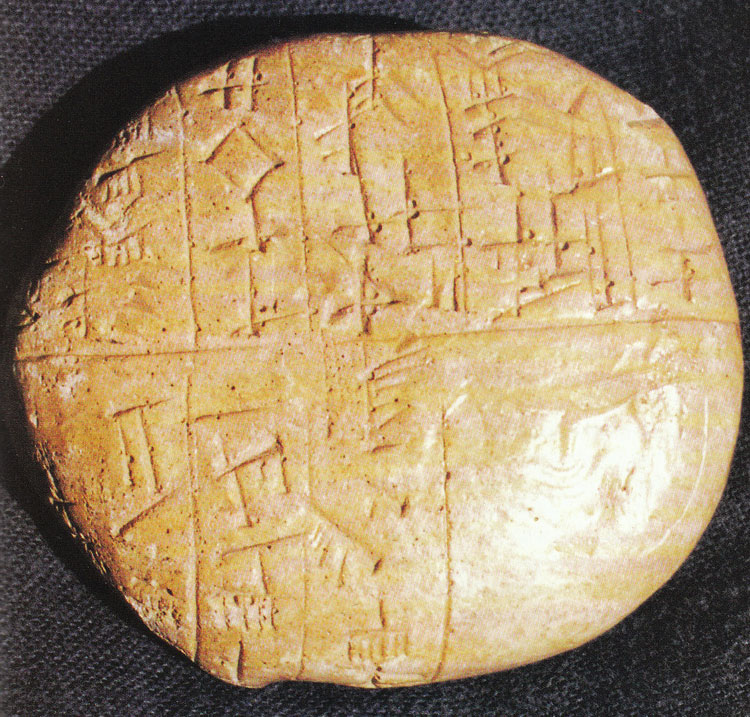
The LORD Jesus Himself and the Gospel writers said that the Law was given by Moses (Mark 10:3; Luke 24:27; John 1:17), and the uniform tradition of the Jewish scribes and early Christian fathers, and the conclusion of conservative scholars to the present day, is that Genesis was written by Moses. This does not preclude the possibility that Moses had access to patriarchal records, preserved by being written on clay tablets and handed down from father to son via the line of Adam–Seth–Noah–Shem–Abraham–Isaac–Jacob, etc., as there are 11 verses in Genesis which read, ‘These are the generations [Hebrew: toledoth = ‘origins’ or by extension ‘record of the origins’] of … .’1 As these statements all come after the events they describe, and the events recorded in each division all took place before rather than after the death of the individuals so named, they may very well be subscripts or closing signatures, i.e. colophons, rather than superscripts or headings. If this is so, the most likely explanation of them is that Adam, Noah, Shem, and the others each wrote down an account of the events which occurred in his lifetime, and Moses, under the guidance of the Holy Spirit, selected and compiled these, along with his own comments, into the book we now know as Genesis2 (see also Did Moses really write Genesis?).
Chapters 12–50 of Genesis were very clearly written as authentic history, as they describe the lives of Abraham, Isaac, Jacob, and his 12 sons who were the ancestral heads of the 12 tribes of Israel. The Jewish people, from earliest biblical times to the present day, have always regarded this portion of Genesis as the true record of their nation’s history.
So what about the first 11 chapters of Genesis, which are our main concern, as these are the ones that have incurred the most criticism from modern scholars, scientists, and skeptics?
Genesis 1–11
Are any of these chapters poetry?
To answer this question we need to examine in a little more depth just what is involved in the parallelism of ideas that constitutes Hebrew poetry.
Let us consider Psalm 1:1, which reads as follows: ‘Blessed is the man that walks not in the counsel of the wicked, nor stands in the way of sinners, nor sits in the seat of scoffers.’ Here we see triple parallelism in the nouns and verbs used (reading downwards in the following scheme):
| walks | counsel | wicked |
| stands | way | sinners |
| sits | seat | scoffers |
As well as this overt parallelism, there is also a covert or subtle progression of meaning. In the first column, ‘walks’ suggests short-term acquaintance, ‘stands’ implies readiness to discuss, and ‘sits’ speaks of long-term involvement. In the second column, ‘counsel’ betokens general advice, ‘way’ indicates a chosen course of action, and ‘seat’ signifies a set condition of mind. In the third column, ‘wicked’ describes the ungodly, ‘sinner’ characterizes the actively wicked, and ‘scoffers’ portrays the contemptuously wicked.
Other types of Hebrew poetry include contrastive parallelism, as in Proverbs 27:6, ‘Faithful are the wounds of a friend, but the kisses of an enemy are deceitful’, and completive parallelism, as in Psalm 46:1, ‘God is our refuge and strength, a very present help in time of need’3.
And so we return to our question. Are any of the first 11 chapters of Genesis poetry?
Answer: No, because these chapters do not contain information or invocation in any of the forms of Hebrew poetry, in either overt or covert form, and because Hebrew scholars of substance are agreed that this is so (see below).
Note: There certainly is repetition in Genesis chapter 1, e.g. ‘And God said …’ occurs ten times; ‘and God saw that it was good/very good’ seven times; ‘after his/their kind’ ten times; ‘And the evening and the morning were the … day’ six times. However, these repetitions have none of the poetic forms discussed above; rather they are statements of fact and thus a record of what happened, and possibly for emphasis—to indicate the importance of the words repeated.
Are any of these chapters parables?
No, because when Jesus told a parable He either said it was a parable, or He introduced it with a simile, so making it plain to the hearers that it was a parable, as on the many occasions when He said, ‘The kingdom of heaven is like … .’ No such claim is made or style used by the author of Genesis 1–11.
Are any of these chapters prophecy?
Not in their full context, although two promises of God are prophetic in the sense that their fulfilment would be seen in the future. One of these is Genesis 3:15, which was the pronouncement by God to the serpent (Satan) in metaphorical form: ‘And I will put enmity Between you and the woman, And between your seed and her seed; He shall bruise you on the head, And you shall bruise him on the heel’ (NASB). Many have interpreted the ‘seed’ in this verse as the Messiah, including most evangelicals and even the Jewish Targums4 hence the Talmudic expression ‘heels of the Messiah’5. The Messiah would suffer wounds to His feet (on the Cross), but would completely destroy Satan’s power. This verse also hints at the virginal conception, as the Messiah is called the seed of the woman, contrary to the normal biblical practice of naming the father rather than the mother of a child (cf. Genesis 5 and 11, 1 Chronicles 1–9, Matthew 1, Luke 3:23–38).
The other is Genesis 8:21–22 and 9:11–17,
‘And the LORD said in His heart, I will not again curse the ground any more for man’s sake … and the waters shall no more become a flood to destroy all flesh.’
Are any of these chapters letters, biography, or autobiography/personal testimony?
This is where we need to consider some of the subscripts mentioned above.
If Adam knew the events of Creation Days 1–6, they must have been revealed to him by God, as Adam was not made until Day 6, and so he could have known them only if God had told him. This view is reinforced by the words, ‘These are the generations of [NIV: ‘This is the account of’] the heavens and of the earth when they were created …’ in Genesis 2:4a. The details of Day 7, the rest day, are included before this in Genesis 2:2–3, thereby completing (as we might expect) the record of a full seven-day week, before this subscript or closing signature appears.
Then follow the events of Genesis 2:4b–5:1a. This section tells us about Adam, his wife Eve, and their sons, and reads very much like a personal account of what Adam knew, saw, and experienced concerning the Garden of Eden, and the creation of Eve (chapter 2), their rebellion against God (chapter 3), and the deeds of their descendants (chapter 4 to 5:1), albeit written in the third person6. This section ends with the words, ‘This is the book of the generations of Adam.’
Is it feasible that Adam could have written Genesis 1:1–2:4a as the result of his pre-Fall conversation with God, and Genesis 2:4b–5:1 as the record of his own experiences? There is no problem concerning his ability to have done so. Adam was created a mature man, endowed with all the DNA, knowledge and skill he needed to perform all the tasks assigned him by God. No cave-man he! Adam knew enough horticulture ‘to dress and to keep’ the Garden of Eden (Genesis 2:15), and ample intelligence to recognize and name the distinct kinds of animals (Genesis 2:19). He (and Eve) could converse with God without ever having learned an alphabet, and there is no reason to suppose that he was not fully skilled in writing also7.
Supposed contradictions
What about the supposed contradictions between the order of events in Genesis chapter 2 and the order given in chapter 1?
There are none! See also Genesis contradictions?
If, with the NIV, we read ‘Now the LORD God had planted a garden in the east …’ (Genesis 2:8) and, ‘Now the LORD God had formed out of the ground all the beasts of the field …’ (Genesis 2:19 with emphasis added), it is clearly seen that chapter 2 states that the plants and animals were formed before Adam. When Adam named the animals (Genesis 2:20), they obviously were already in existence. There is no contradictory significance in the order of animals listed in Genesis 2:20; it is probably the order in which Adam met the animals, while the order of their creation is given in Genesis 1:20–25. Dr Henry Morris comments:
‘It was only the animals in closest proximity and most likely as theoretical candidates for companionship to man that were actually brought to him. These included the birds of the air, the cattle (verse 20—probably the domesticated animals), and the beasts of the field, which were evidently the smaller wild animals that would live near human habitations. Those not included were the fish of the sea, the creeping things, and the beasts of the earth mentioned in Genesis 1:24, which presumably were those wild animals living at considerable distance from man and his cultivated fields.’8
Concerning the names of geographical sites, we have no idea what the configuration of the land or the rivers was before the Flood, because the pre-Flood world was completely destroyed. The land areas and rivers named before the Flood do not correspond to similarly named features after the Flood.

The purpose of Genesis 2:18–25 is not to give another account of creation but to show that there was no kinship whatsoever between Adam and the animals. None was like him, and so none could provide fellowship or companionship for him. Why not? Because Adam had not evolved from them, but was ‘a living soul’ whom God had created ‘in His own image’ (Genesis 2:7 and 1:27). This means (among other things) that God created Adam to be a person whom He could address, and who could respond to and interact with Himself. Here, as in many other places, the plain statements of the Bible confront and contradict the notion of human evolution.
There is therefore enough evidence for us to conclude that Adam most probably was the author of Genesis 2:4b–5:1, and that this is his record of his own experiences with respect to events in the Garden of Eden, the creation of Eve, the Fall, and in the lives of Cain, Abel, and Seth.
The next section is from 5:1b to 6:9a, and deals with the line from Adam to Noah, ending with, ‘These are the generations [or origins] of Noah.’
The next section is from 6:9b to 10:1a, and deals mainly with the Ark and the Flood, ending with, ‘Now these are the generations of the sons of Noah, Shem, Ham, and Japheth.’ The wording of this subscript suggests that this portion was written by one of Noah’s sons, probably Shem, as Moses was descended from Shem. These chapters read very much like an eye-witness account because of the intimacy of detail which they contain. Consider Genesis 8:6–12 and note how this contains that ring of authenticity which is characteristic of an eye-witness account. It may even have been Shem’s diary!
Genesis 8:6–12:
6 At the end of forty days Noah opened the window of the ark that he had made:
7 And sent forth a raven. It went to and fro until the waters were dried up from the earth.
8 Then he sent forth a dove from him, to see if the waters had subsided from the face of the ground.
9 But the dove found no place to set her foot, and she returned to him to the ark, for the waters were still on the face of the whole earth. So he put out his hand and took her and brought her into the ark with him.
10 He waited another seven days, and again he sent forth the dove out of the ark.
11 And the dove came back to him in the evening, and behold, in her mouth was a freshly plucked olive leaf. So Noah knew that the waters had subsided from the earth.
12 Then he waited another seven days and sent forth the dove, and she did not return to him anymore. (ESV)
Such meticulous details are the stuff of authentic eye-witness testimony. They have the ring of truth.
There is thus a substantial body of evidence that these portions of Genesis delineated by subscripts were written by the persons named therein, for the purpose of making and passing on a permanent record.
So then, were these first 11 chapters written as a record of authentic historical facts?
Answer: Yes, for several reasons.Internal evidence of the book of Genesis
1. There is the internal evidence of the book of Genesis itself. As already mentioned, chapters 12–50 have always been regarded by the Jewish people as being the record of their own true history, and the style of writing contained in chapters 1–11 is not strikingly different from that in chapters 12–50.
2. Hebrew scholars of standing have always regarded this to be the case. Thus, Professor James Barr, Regius Professor of Hebrew at the University of Oxford, has written:
‘Probably, so far as I know, there is no professor of Hebrew or Old Testament at any world-class university who does not believe that the writer(s) of Genesis 1–11 intended to convey to their readers the ideas that: (a) creation took place in a series of six days which were the same as the days of 24 hours we now experience (b) the figures contained in the Genesis genealogies provided by simple addition a chronology from the beginning of the world up to later stages in the biblical story (c) Noah’s flood was understood to be world-wide and extinguish all human and animal life except for those in the ark. Or, to put it negatively, the apologetic arguments which suppose the "days" of creation to be long eras of time, the figures of years not to be chronological, and the flood to be a merely local Mesopotamian flood, are not taken seriously by any such professors, as far as I know.’9
3. One of the main themes of Genesis is the Sovereignty of God. This is seen in God’s actions in respect of four outstanding events in Genesis 1–11 (Creation, the Fall, the Flood, and the Babel dispersion), and His relationship to four outstanding people in Genesis 12–50 (Abraham, Isaac, Jacob, and Joseph). There is thus a unifying theme to the whole of the book of Genesis, which falls to the ground if any part is mythical and not true history; on the other hand, each portion reinforces the historical authenticity of the other.10
Evidence from the rest of the Bible
4. The principal people mentioned in Genesis chapters 1–11 are referred to as real—historical, not mythical—people in the rest of the Bible, often many times. For example, Adam, Eve, Cain, Abel, and Noah are referred to in 15 other books of the Bible.
5. The LORD Jesus Christ referred to the Creation of Adam and Eve as a real historical event, by quoting Genesis 1:27 and 2:24 in His teaching about divorce (Matthew 19:3–6; Mark 10:2–9), and by referring to Noah as a real historical person and the Flood as a real historical event in His teaching about the ‘coming of the Son of man’ (Matthew 24:37–39; Luke 17:26–27).
6. Unless the first 11 chapters of Genesis are authentic historical events, the rest of the Bible is incomplete and incomprehensible as to its full meaning. The theme of the Bible is Redemption, and may be outlined thus:
i. God’s redeeming purpose is revealed in Genesis 1–11,
ii. God’s redeeming purpose progresses from Genesis 12 to Jude 25, and
iii. God’s redeeming purpose is consummated in Revelation 1–22.The historical truth of Genesis 1—11 shows that all mankind has come under the righteous anger of God and needs salvation from the penalty, power, and presence of sin.
But why does mankind need to be redeemed? What is it that he needs to be redeemed from? The answer is given in Genesis 1–11, namely, from the ruin brought about by sin. Unless we know that the entrance of sin to the human race was a true historical fact, God’s purpose in providing a substitutionary atonement is a mystery. Conversely, the historical truth of Genesis 1–11 shows that all mankind has come under the righteous anger of God and needs salvation from the penalty, power, and presence of sin.
7. Unless the events of the first chapters of Genesis are true history, the Apostle Paul’s explanation of the Gospel in Romans chapter 5 and of the resurrection in 1 Corinthians chapter 15 has no meaning. Paul writes: ‘For as by one man’s [Adam’s] disobedience many were made sinners, so by the obedience of one [Jesus] shall many be made righteous’ (Romans 5:19). And, ‘For since by man came death, by man came also the resurrection of the dead. For as in Adam all die, even so in Christ shall all be made alive … And so it is written, The first man Adam was made a living soul; the last Adam was made a quickening spirit’ (1 Corinthians 15:21–22; 45). The historical truth of the record concerning the first Adam is a guarantee that what God says in His Word about the last Adam [Jesus] is also true. Likewise, the historical, literal truth of the record concerning Jesus is a guarantee that what God says about the first Adam is also historically and literally true.
Conclusion
We return to the question which forms the title of this article. Should Genesis be taken literally?
Answer: If we apply the normal principles of biblical exegesis (ignoring pressure to make the text conform to the evolutionary prejudices of our age), it is overwhelmingly obvious that Genesis was meant to be taken in a straightforward, obvious sense as an authentic, literal, historical record of what actually happened.
Re-posted on homepage: 8 November 2023
References and notes
- See Genesis 2:4; 5:1; 6:9; 10:1; 11:10; 11:27; 25:12; 25:19; 36:1; 36:9; 37:2. Return to text.
- The seminal author on the colophon concepts was P.J. Wiseman, Creation Revealed in Six Days, Marshall, Morgan & Scott, London, 1948, pp. 45–53. For an excellent evaluation of this by a evangelical linguist see The Oldest Science Book in the World, by Dr Charles V. Taylor, Assembly Press, Queensland, 1984, pp. 21–23, 73, 121. Return to text.
- This discussion of Hebrew poetry was adapted from J. Sidlow Baxter, Explore the Book, Vol. 1, pp. 13-16. Return to text.
- Aramaic paraphrases of the OT originating in the last few centuries BC, and committed to writing about AD 500. See F.F. Bruce, The Books and the Parchments, (Westwood: Fleming H. Revell Co., Rev. Ed. 1963), p. 133. Return to text.
- A.G. Fruchtenbaum, Apologia 2(3):54–58, 1993. Return to text.
- The use of the third person is no problem. Moses wrote the long account of his own life in Exodus to Deuteronomy in the third person, and many classical authors like Julius Caesar also wrote in the third person. Return to text.
- Adam and Eve knew how to sew fig-leaf ‘aprons’ for themselves (Genesis 3:7). Within a few generations, Adam’s descendants founded a city (Genesis 4:17), were tent-makers, cattle farmers, musicians with the ability to make both stringed and wind instruments, and metallurgists with the ability to smelt the ores of copper, tin and iron and then to forge all kinds of bronze and iron tools (Genesis 4:20–24). Dr Henry M. Morris comments in The Genesis Record (Baker Book house, Grand Rapids, Michigan, 1976, pp. 146–147):
‘It is significant to note that the elements which anthropologists identify as the attributes of the emergence of evolving men from the stone age into true civilization—urbanization, agriculture, animal domestication, and metallurgy—were all accomplished quickly by the early descendants of Adam and did not take hundreds of thousands of years.’ Return to text.
- Morris, H., The Genesis Record, p. 97. Return to text.
- Letter from Professor James Barr to David C.C. Watson of the UK, dated 23 April 1984. Copy held by the author. Note that Prof. Barr does not claim to believe that Genesis is historically true; he is just telling us what, in his opinion, the language was meant to convey. Return to text.
- Adapted from J. Sidlow Baxter, Explore the Book, Vol. 1, pp. 27–29. Return to text.


Readers’ comments
Comments are automatically closed 14 days after publication.